
If you have a spooky story to share, email Espookytales@gmail.com or leave us a voicemail at espookytales.com. You can also send it on Discord!
For more spooky stories, check out the Tiktok! https://www.tiktok.com/@espookytales
Chat with us on Discord! https://discord.gg/4zVbvd7Hek
Instagram https://www.instagram.com/espookytales/
Support Espooky Tales on Patreon and receive bonus episodes, shoutouts, stickers and more! https://www.patreon.com/Espookytales
Get Espooky Merch: https://www.bonfire.com/store/espooky-tales/
[00:00:00] Hi everyone, this is Cristina. And this is MJ. And this is Espooky Tales, the podcast about all things espooky with a little bit of laughs. Today we are talking about haunted hospitals, former hospitals, current hospitals. I don't know. Do you have any current hospitals? No. Huh?
[00:00:26] Former on my end, no current ones. Former on my end too. You might hear my baby. It's not a ghost baby haunting the podcast. It's Sammy. I'm watching his tablet next to me so I can record. Let's see.
[00:00:40] Do we have anything to address before we get to the listener story? I have no idea. I don't think so. No, because I talked about the intro song changing last episode. Because I had not mentioned that at all. But I did already. Okay. Yeah, I think we're good.
[00:00:56] All right. So let's get to the listener story before. Okay, I'm just I have to get used to him talking at the same time. He's like singing along or something to some bear song. I'm assuming you can hear him. I can hear him. I can't hear the song.
[00:01:10] Okay. Yeah, you can just hear his rendition of the song. Better, 10 times better than the original. I will disagree. Before we get to the listener story, if you have a story that you want to send in for us
[00:01:27] to read or react to, you can email at spookytales at gmail.com. You can submit it on Discord. There's a channel that says submit your scary story. You can call the number in the show notes and leave it in a voicemail and we'll play it.
[00:01:41] You can send us a voice memo attached to our email. DM it. There's a lot of options. So this story was actually left in a comment on TikTok about Lassie Guapa. Do you know what Lassie Guapa is, MG? Yeah, we haven't covered her. We haven't?
[00:01:59] I feel like we have. No, I don't think so. We mentioned her. I was going to say, maybe we've mentioned her in passing, but Lassie Guapa is a legend from the Dominican Republic. It's a woman that lures men into the jungle. Her feet are backwards. She's short.
[00:02:14] She's beautiful. Like us, except the feet part, you know? Yeah. Feel it. We also don't lure men into the jungle. Yet. No, I'm just kidding. Yet. Kidding. I mean, luring men into the jungle is a dream job, honestly.
[00:02:32] Yeah, my dream job is to become like a swamp witch and live like a hermit. So this was left in my TikTok about Lassie Guapa. So here it goes. My stepdad comes from Oaxaca, Mexico, and he said his friend was lured by one of these
[00:02:52] women, parentheses demons, after a night of drinking. His friend said that the woman was beautiful. She had a dress on. She was glowing and looked stunning. She was telling him to follow her in the middle of the night.
[00:03:05] Without knowing he was walking through the mountainside, he was in a trance. He couldn't stop walking and he couldn't look away, even if he wanted to. So he followed her and was walking through the sharp bushes, rocks, and trees. And he said he walked for an entire night.
[00:03:19] When the morning came, she disappeared. He woke up disheveled with scratches and bruises all over his legs. And yes, that is the story. And then someone was like, hold on, my dad's from Oaxaca and has a similar story. Ooh, blink if you're okay, Oaxaca. They're not.
[00:03:35] A short story. But I mean, I don't know of Lassie Guapa being in Oaxaca, but there are stories of a horse lady similar to Lassie Guanaba, where it's like the face of a horse and she shapeshifts
[00:03:46] and lures men into, you know, the wild for them to never be seen again. I don't remember her name because it's not Lassie Guanaba. She has a different name. But I was like, maybe it was her.
[00:03:57] Maybe they have very similar attributes in the sense that they appear as beautiful women and then they lure men to their demise. And we stan. Yes. So, yeah, on to our stories. Do you want to do? Should we just go like switch back and forth?
[00:04:17] You start and I'll do the next one. Yeah, that sounds good. OK, so this first story is like hospital adjacent. It involves a hospital, but like it's a little off topic, but it's creepy.
[00:04:28] So Friday, June 9th, a woman who was presumed dead was discovered alive while she laid in a casket at her own funeral. This happened in Bava Ollo, Ecuador, and this is the capital of Los Rios province in Ecuador. The woman was 76 year old Bella Montoya.
[00:04:48] She was a retired nurse and according to her son, Gilberto Barbera, had been taken to the hospital Martín y Casa early Friday morning after showing symptoms of a stroke. He told news outlets that when his mother arrived at the hospital, she was unconscious
[00:05:03] and doctors tried to revive her, but she was declared dead. Then the doctors handed him her belongings and a death certificate. And that same day, he started the process of finding a place to hold the funeral. And he came across Wendy Avendano. She owns a funeraria.
[00:05:25] I guess it's called Funeraria Avendano. You know, when you don't know what to name something, you just put your last name on it and that works, you know? There's a really good Mexican restaurant by my house called Tu Casa Marquez. Classic name. Really good carne asada and burritos.
[00:05:42] We recommend. And she had known the family for years. After hearing about what happened to his mom, Wendy offered her a funeral home for the family and for the funeral to set to happen like later that day.
[00:05:56] And just like a reminder, funerals happen so fast in Latin America. It's not like here. I think it's like... Here's this like at least a seven day process because... Yeah, it's very slow. But over there they set everything up so fast. A lot of religions too.
[00:06:11] They have to bury them within the day. Yeah, the funeral was set for later in the day and then around evening time, 20 family members arrived to the funeral home to mourn her death. And all of a sudden the casket started to move. I would have like...
[00:06:26] I would have had a heart attack. I would have been terrified. I would have been like, bitch move over, we're both gonna go there. Make some room. After like five hours of the wake, the coffin was making like there were sounds coming from there.
[00:06:43] And so his mom, she had been wrapped in sheets and she was hitting the coffin from the inside. That's when everyone approached and they could see that she was breathing. She was not dead. Everyone was in complete shock. They quickly called the emergency services.
[00:06:59] It's unclear who did this, but someone started to record like everything that was happening and the video has now gone viral. We'll share a snippet of it. And you could see in the video that several men are trying to help her while she's in
[00:07:12] the casket struggling to breathe. Then there's a man that could be heard that like he's mad and saying they've called 911. But there's no ambulances available. They're gonna get a call back. What the hell? I'd be mad too. Yes. There's someone else saying, then what's the point of 911?
[00:07:32] But yeah, whoever's shooting the video, whoever's recording could be heard saying that she's been laying in the closed casket since noon. Poor lady. Yeah, that's terrifying. That's like nightmare fuel right there. Like you're waking up and you're in the casket. Thankfully they didn't do like an autopsy.
[00:07:52] Like oh my God. Thankfully they didn't bury her. That too. And it's 14 minutes long. You could see paramedics arriving in the video and then helping her out. That must have been traumatizing. Right? I have claustrophobia so I would have lost my shit. Yeah, same. Everyone's shocked.
[00:08:10] There's one man who was like, oh, we witnessed a miracle. What they witnessed was a mistake. Somebody accidentally declared her, I don't know. Dead or something. Yeah, because her pulse must have been like too weak to pick up or something. Or the machinery was wonky.
[00:08:26] I mean, I have to die and I don't think so. They probably made a mistake at the hospital is my guess. I don't know though, because I guess she couldn't breathe and that's why she had been intubated.
[00:08:39] So if she had really died, she was there with three hours without any like respiratory assistance like you had at the hospital because she had been intubated. The health and ministry of Ecuador said that she is still in intensive care as of Monday.
[00:08:54] So right now it's like June 15th. So like this Monday that just passed. There's another committee that was formed to look at what happened at the hospital. Oh my God. Makes sense. Yeah. I mean, that was more recent, but it's just it's a weird story.
[00:09:09] Like it had to be mentioned. That is so weird. Yeah. But yeah, very weird. Okay. So my story is of the Durán sanatorium and it was built in 1915 by Dr. Carlos Durán in an attempt to save his own daughter who was sick with consumption.
[00:09:30] What is consumption? I always hear it, but I never understand what it is. TB. Tuberculosis. Oh, that makes sense. But they didn't have like the scientific name. So when people would get sick, they'd be like, she has consumption or he has consumption. Yes.
[00:09:45] And Dr. Durán chose the province of Cartago for... Cartago? Cartago? I can't pronounce it. It was built over the backdrop of his hospital because of the altitude, wind, humidity, temperature and sun exposure and clean drinking water. It was at the time a state-of-the-art tuberculosis hospital.
[00:10:05] It also functioned as a leprosy ward. It was able to treat up to 300 patients at a time who were mostly looked after by nuns. It functioned as a hospital for many years, but it eventually became a place for the mentally ill.
[00:10:21] TB was no longer an epidemic and mentally ill patients were being transferred to places that were better equipped for them. In the 60s, the sanatorium was changed into an orphanage and then a maximum security prison. So it had a lot of uses.
[00:10:37] The volcanic eruption of the Irasu volcano caused damage to the sanatorium, making the building unsafe and was permanently closed. The building now is a shell of its former self. It's weathered and dilapidated. There's tagging all over the walls, chipped paint, broken windows. The haunted vibes are vibing.
[00:10:58] I would take like haunted like Halloween pictures there. Yes. It is a protected landmark now and visitors can explore for a small view. The sanatorium is said to be haunted and with its long history it's understandable. The most common sighting is of a nun.
[00:11:15] Many people have encountered her. It's said that those who were sick and saw her considered it a good sign for their health. And she's said to be a very good omen. Oh, that's good. Nice ghost. Because I'd be terrified.
[00:11:27] It's like, you know, if you're sick and you see the nun, it's like, oh, look, look at me. I'm going to get better. Good. I'm going to be OK. Another commonly reported apparition is that of a little girl.
[00:11:38] Many people believe that she is the daughter of Dr. Turan and he tried everything in his power to save his daughter. But unfortunately, she died of consumption. She spent a good part of her childhood there getting treatment.
[00:11:52] She's now commonly seen in the staircases and on the rooftop of the building. Wow. That one's sad. What is she doing on the rooftop? I don't know. That's probably what she did. Like she spent her entire childhood in this like in the sanatorium, you know, because
[00:12:07] that's where she was getting her treatment. That I mean, the whole place was built for her. She probably didn't have a lot of stuff to do at the hospital, so she was probably like on her good days exploring. Yeah.
[00:12:18] There is another spirit of an unknown woman who's seen often and she's described as an older woman wearing a blue dress. She's pale and has white hair and is often seen staring out of windows and in the halls of the sanatorium.
[00:12:33] Those who visit the sanatorium don't just see these ghosts. There are also reports of shadow people, apparitions of patients, prisoners and children. Disembodied voices can be heard, children laughing and playing, electrical disturbances and cold spots.
[00:12:48] And I want I need like a show to like, yeah, like go and explore. There's like a video on YouTube where some people go ghost hunting at the place and they caught some weird stuff.
[00:12:58] So if any of our listeners want to check that out, just search for Duran sanatorium and the YouTube search bar. And it costs about one thousand two hundred colones and that's two dollars USD.
[00:13:13] OK, I was about to ask what's the conversion so I could see the price, but that's pretty cheap. Two dollars to explore the whole thing. That's not bad. Yeah. Where is this again? This is in where did I even believe in Costa Rica. OK, OK.
[00:13:30] Oh yeah, I remember now. I was going to say we should go there, but those flights sound expensive. That's like a little bit that the entrance fee is in my budget. The traveling fee is not. Same Z's. But yeah, that's that's the haunted hospital.
[00:13:54] And it was like it had a whole bunch of stuff going on there. Yeah. Medical orphanage and then maximum security prison, which I did not see coming. It's a three in one. Yeah, it's a three in one.
[00:14:08] We got orphans on this side, sick people on this side and prisoners on that side. That's so I don't know. That's so strange. It's so random. Everything. Yeah. Is the sanatorium the same thing as an asylum or no? Yes. Yes.
[00:14:23] The reason it's called the sanatorium is because like the TB patients. They just house the mentally ill, but then they moved them because they it's like in the middle. I don't want to say it's in the middle of nowhere, but it kind of is at the time kind
[00:14:37] of was at the time in the middle of nowhere and like they didn't have access. They weren't able to give them the care that they would probably need in a bigger city, I would say. So they transferred them out and then they turned that into an orphanage. Okay.
[00:14:56] And then after the orphanage, the prison. Okay. Okay. So it wasn't all these things at the same time. No, no. That would have been wild. That would have been wild. Kind of like the kind of like the place I'm talking about, which is also a former asylum. Ooh.
[00:15:10] Welcome to our little haunted break. We want to give a shout out to our newest patrons, Brianna, Herson, Alejandro and Jessica. Also, thank you to the rest of our patrons, Lainey, Ken, Chata, Christina, Eric and Vivi, Nightmare on Fierce Street, Maddie, Desiree, Diana, Ruben, Sonia, Liliana, Isaac, Nacho
[00:15:33] Mama, Nelly, Alex and Azriel, Malia, Gina, Diana, Ashes, Anne, Janie, Michelle, Monica, Modesto, Perla, Yesenia, Dalia, Martin, René, Iris, Ghost Train at Madtown Charity. Your support means the world to us. Thank you so much.
[00:15:51] If you want to join the Patreon, go ahead and head on over to patreon.com slash spooky tales. You'll gain access to bonus episodes. We try to do two a month, but always at least one.
[00:16:02] You get to vote on the movie night polls where you choose the movie night that we're going to be watching and monthly goodies like stickers. And if you join the highest tier, no mames, super serious spooky, then you get an exclusive keychain.
[00:16:16] But don't worry if you cannot support us monetarily, then you are not missing out on anything. The best support that you can give us is just listening to our episodes here. So thank you for doing that.
[00:16:29] So I think we have all noticed, but like a lot of buildings today were at one point and this is what they're called, but like I'm not going to be using this word, but insane asylums. And like there's no surprise because, you know, these places were terrible, especially
[00:16:45] back in the day when like nobody knew anything about. Psychology. Yeah, they did. They like house normal people and like, no, I don't want to say normal because normal subjective who's normal, but like they neurotypical maybe. I was going to say I would have been in this place.
[00:17:01] I definitely would have like I was it was the thing. It's like the only people I get along with is other people who would have been lobotomized with me. Like that would have been me. I know for a fact. I'd be like crazy woman.
[00:17:16] I have no doubts that I would have been like, but I mean, there's a reason that all these places are like so haunted today because horrible things happen in all of these places. And this isn't just, you know, in Mexico, like I'm talking about one in Mexico today,
[00:17:33] but like the United States is full of former asylums that are haunted now. Right. And there was also I don't know if this is true. I know like there was that one. What was it called? That one government project where they took runaways and then like experimented against
[00:17:53] them? What was it called? I don't know. You know what I'm familiar like, you know, I read about it. Yeah. And it was like in I think the CIA did it or I'm pretty sure it's always a CIA like the something ultra.
[00:18:06] I think it was that one where all the the leaked documents came out and like they were like experimenting on people with disabilities and runaways and people with like like mental health problems. Crazy. So, yeah.
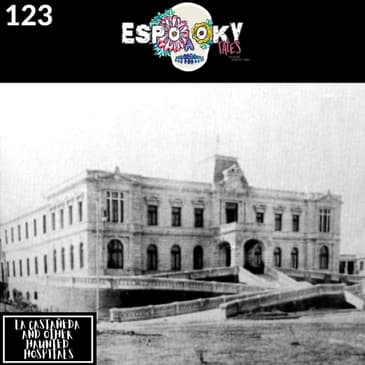
[00:18:22] So, yeah, everywhere it seems like everywhere in the world had these kind of terrible asylums where people were just shoved, forgotten about and mistreated. And one of the worst and most sinister asylums in Mexico was called La Castaneda.
[00:18:36] That's going to take me some time to get used to saying. It's a mouthful. Yes. And I can't read so. This was located in Ciudad, Mexico. Well near Ciudad, Mexico. So in 1878 during his dictatorship Porfirio Diaz and we've talked about Porfirio Diaz
[00:18:55] a little bit in our historic women episode where I think I talked about Las Adelitas. I'm pretty sure I went over a little bit about Porfirio Diaz and this time period in Mexico,
[00:19:07] but he was the I wouldn't say president because he was a dictator, but he was in charge of the country at the time and he requested the construction of La Castaneda. This time period like I think it's called El Porfiriato in Mexico this time period.
[00:19:24] He really wanted to westernize Mexico and he took a lot of influence from Europe because he wanted to be white. I mean, who didn't back then? Right. He definitely did. Yeah. He would even powder himself a little bit more white. Oh, of course he fucking did. Yeah.
[00:19:41] Not that's not a surprise to anyone, I think. And so he learned that the French had all these asylums that were like this is where they institutionalized people that needed help. And he's like, we're going to make one just like them.
[00:19:54] He even designed this building to look like a French asylum, which I didn't write down the name of the place. But so it was built from a former hacienda. So this hacienda was already there and they expanded on it.
[00:20:08] And it's in a pueblo called Mishkoac, which is near Ciudad Mexico. And so that plan started in 1878. And then on September 1st, 1910, the opening, the inauguration took place. And this place, La Castaneda, was open for six decades, which is way too long.
[00:20:30] And during this time it earned the name Las Puertas del Infierno, the doors to hell. So yeah, I mean, that gives you an idea. And they had 23 and they called them pavillones, which I guess is pavilions.
[00:20:48] But I think really what that means is like sections for the different type of patients that were there. So this place was originally made to house 1,200 patients. On the day that it opened, they received just over 700. Wow.
[00:21:01] Yeah, on opening day because they had people transferred over from other smaller hospitals that just couldn't handle, quote unquote, handle these kind of patients. And I'm sure that when they opened, they didn't plan on becoming known as the doors to hell. But here they are. Here they are.
[00:21:20] I guess no one could have guessed. I mean, surely they would have read the political landscape. I don't know. No one could have guessed, though, that the Mexican Revolution was just about to start.
[00:21:30] And so then the funding for the hospital became scarce while the demand for patients to be interned was at an all time high because this is a time of turmoil. They started running out of room and money.
[00:21:43] So just to give you an idea of like what kind of people were put here. So people with epilepsy. Oh, yeah, I would have definitely been in there. Big time. Autistic, epileptic, ADHD. Yeah. Like spooky shit. Yes. They also put, let's see, people with schizophrenia.
[00:22:08] Obviously, they didn't know how to deal with any of these things. So yeah, people with epilepsy, schizophrenia, alcoholics. Yep. Nymphomaniacs. Everything. Yeah, literally everything. And then also, obviously, what always tends to happen, the most vulnerable. So at house people, poor people, women, hysterical women. Oh no.
[00:22:32] These are just different reasons why people were. This is why like when people say, man, like I wish things were like in the 50s. I'm like, I do not. No, please. I would have been put into like one of those for being hysterical.
[00:22:47] Well, OK, let me tell you. So when women had her sister sent to this place because she said her sister was always nervous, melancholy, melancholy, I don't know how to say that word. Like depressed, I feel like. Yeah.
[00:23:02] And too emotional when she read books or listened to music. Well, shit. So, I mean, yeah, there would have been me like. That one is straight up like panic attacks. Depression. Yeah, seriously. And yeah, like people that didn't want to deal with their alcoholic family members would
[00:23:22] put them in there. Anyone that didn't fit societal norms. So anyone that was queer, anyone with like anxiety. I mean, things we've mentioned depression, ADHD, things that nobody had no idea what these were on top of like anyone who women that enjoyed sex. No, big no, no.
[00:23:39] And not even like too much sex. Like really, what is that? But just like a normal amount of like, oh, you enjoy this? No, crazy. You're going over there. So, yeah, anyone who was outside of these societal dorms, if you were a little emo,
[00:23:57] interned, like it was everything. She wears too much black. Yeah, seriously. She cries when she listens to this song. Gone. She likes to sleep in. No, can't have that. You need to wake up when the rooster crows and get dinner, breakfast, lunch and dinner ready. Step.
[00:24:21] Le gusta pistear? Gone. Seriously. Just to give you like an idea of all the different sections or, you know, pavillones that they call them. There was the distinguished patients pavilion. This was for members of wealthy families who did not exhibit aggressive behavior and their
[00:24:40] relatives made generous donations to keep them there. And they're the I mean, they're the ones who like really funded this place because they didn't want to deal with their family members who maybe just needed a little help. There was the observation ward.
[00:24:56] And this is where patients arrive for the first time and stay there until they were a quantum co diagnosed. And these diagnosis were all wrong. Some of the stuff I already mentioned, but also like hysterical or sad, sad woman or emotional or things like that.
[00:25:12] So there was the dangerous patients pavilion. This was for aggressive patients with criminal records who were sent there by the police. There was the epileptic epileptic pavilion. There was a this name is terrible. There was El Pavilion de los imbeciles. The pavilion of the imbeciles.
[00:25:32] And again, I'm out here calling people imbeciles. This is what it was called. Just using the language of the time. And yeah, these are people who had obvious like mental issues like, you know, people born with Down syndrome, encephalitis.
[00:25:49] What's the disease where or the disorder where people's heads are very small? I don't know. I have I know what you're talking about. Yeah, but I don't. Yeah, I don't remember the name of it. But people with that like yeah, people who they couldn't classify as anything else.
[00:26:04] They went there regardless of age. Everyone was in the same place. And then there was the infectious patients pavilion. And this was for people with things like tuberculosis, syphilis, leprosy, typhoid fever. Sex workers were put here without even getting any sort of exam. This was just their place.
[00:26:25] And yeah, just that's just an idea of what the different places or sections of La Castaneda. So by 1942, there was almost 4000 patients here. And need I remind you that this was made to hold 1200 people. Wow. So lots of a lot more. Yeah.
[00:26:45] And I mean, like most asylums of these times, patients were their treatment was abuse. It wasn't real treatment. Right. So the usual like electric shocks, ice baths. Then when they started running out of room for ice baths, it's wearing like your normal
[00:27:04] ice baths like oh, I'm a little sore. I'm gonna do an ice bath. No, these were like, they were put in these baths for hours. But then when they started, they didn't have enough baths for all the patients. They did what they called torment baths.
[00:27:17] And so this was putting the patients out in the courtyard and then just like hosing them down all together with ice cold water to cure them supposedly. They would also sit them down in the courtyard and place sandbags on them for hours.
[00:27:32] They would lock them in rooms full of rats again for hours. Wow. And these were just some of the treatments. Something else that was a treatment. They would place patients into diabetic comas on purpose. What the hell? Yes.
[00:27:48] They would inject them with insulin and then would wake them up with spoonfuls of sugar. What the hell? Yeah. And then when they started losing funding, they would ask family members to provide this sugar. Wow. Yes.
[00:28:03] So in one terrible incident, while a nurse was giving this quote unquote treatment. So she gave all the people that were in the room insulin to put them into these comas. And then while trying to give them sugar to bring them back, whatever, instead of grabbing
[00:28:22] the sugar, she apparently accidentally grabbed some sort of like cleaning acid powder. Yeah. Oh my God. All the patients were like screaming or throwing up and they were essentially burning from the inside because of the acid.
[00:28:38] And it's unknown how many of them were in the room at the time. It's estimated that it was like 30 to 50. Wow. And they all died. Terrible. And that's just, I mean, one of the many terrible things that happened there. At one point there were too many patients.
[00:28:54] They took beds out because there was no more room and every patient had to sleep on the floor. So there would be more room. You know, patients, they came and went. Some people stayed for weeks. Some people stayed for months. Some people their entire lives, years.
[00:29:11] Some people escaped. The asylum officially closed its doors in 1968. The building was demolished and in its place there were apartments built and I believe like maybe one or two stores in that same area. It was big. This area was called Lomas de Plateros.
[00:29:30] The first families began moving into this new building in 1973. And this is when stories, paranormal stories began. So people living here would hear rolling marbles out of nowhere. And there's just something about a rolling marble that I'm like. It's just so creepy. Very creepy. I don't like it.
[00:29:51] There was also disembodied laughter. The sound of dripping water when there was no water dripping from anywhere. Yeah, I don't like that one either. Yeah. Every single night after 10 p.m. residents would hear cries like ear piercing crying. Disembodied footsteps in the hallways.
[00:30:10] People would see their furniture moving on its own. Macetas like flower pots moving and falling and just breaking. But like no one was doing this. And then screaming like agonizing screams. And that's just some of the things people experience in this building.
[00:30:26] I couldn't find specific stories other than this little blurb of like things that happened there. I also didn't include very specific stories of the asylum, but there's a lot out there. People wrote down some patients had journals and wrote down their experiences.
[00:30:44] We would be here for hours if I included everything. But Legendas de Canarias has an episode that's like an hour and a half on this place alone with a lot more information on the people that were there. There's another person, her YouTube channel is Jean Arenas. Jean? Jean?
[00:31:04] I don't know. It's all in Spanish though. She has two videos on this place. They are each like 20 minutes long and she goes into specific stories of people in the asylum as well. Those are both worth a listen if you want specific terrible stories about people that
[00:31:19] were placed in the asylum. Again, I just didn't include any of it or we would be here for hours. And it was a lot of writing. But yeah, I mean, terrible place. I'm not surprised that people living where this building was are now experiencing these things.
[00:31:35] That's so sad though. Yeah. Can you imagine? Just I don't know. It's terrible. It's terrible. So this last story is another. It's also in Mexico and there is a deserted hospital in the city of Madero Beach in Tampico in the state of Tamaulipas.
[00:32:01] I always have to struggle with that. Good job, Tamaulipas. In the city of Tampico, the most mysterious building buildings, I think. I think it's like a whole thing belongs to the Juan Alvarez Diaz Rehabilitation Center known by the locals as Hospital Naturista opened in 1984.
[00:32:21] It was built by and for the Union of Oil Workers of the Mexican Republic. During the hospital's short operation, it focused on nutrition, eye problems and rehabilitation services for union members. At the time, it was a state of the art medical facility and the most advanced hospital in
[00:32:37] Latin America. Five years later, in 1989, the hospital closed. That year, Joaquin Hernandez Galicia, known as La Quina, the secretary general of the trade union at the time was arrested. So it probably has something to do with why the hospital closed down.
[00:32:56] From 1989 to 1994, a private security team was put in charge of looking after the place. And this is where the paranormal stories started. The legend of the ghost nurse named La Planchada, which is roughly translated to Iron. Wait, this is where La Planchada is?
[00:33:13] I thought La Planchada was somewhere else this whole time. I guess maybe she's in a lot of places. Maybe. I don't know. Well, once I'm done with the story, you'd be like, I'm not sure. I feel like the people from here took that story and brought it over.
[00:33:27] You know what I mean? Okay. Okay. Because I was like, I'm pretty sure I've heard that it's in Ciudad Mexico, but maybe it's one of those stories where it's a nurse and people would just call her La Planchada. So yeah.
[00:33:38] So it's roughly translated as an ironed woman or smartly dressed woman, but also means sad a woman and meaning like her outfits, like neat and pressed and ironed and all that jazz. The legend goes that when the hospital was fully functioning, a nurse fell in love with
[00:33:56] a young doctor and the doctor broke her heart and this caused her to be cruel. And it is said that she's responsible for the death of a nine year old patient. The father, furious over the death of his child, got revenge and allegedly cut the nurse's
[00:34:10] throat with the scalpel. Now she haunts the hospital. Though many people claim to have witnessed the ghost of the nurse, skeptics don't believe it's true due to the fact that the hospital never treated severely ill patients.
[00:34:22] So it was more like a checkup hospital, like where you see your GP, not like a, we have an ER hospital type stuff. In the nineties, the hospital was used for raves and many people who attended these raves swear they saw the nurse.
[00:34:39] In later years, pentagrams have been found in a hospital along with animal remains and blood. A year prior to the vice article on this place, a body was found by some kids exploring the abandoned building. So if it wasn't haunted before, it is now. It is now.
[00:34:58] So that's why I think like they took the legend of La Planchada and brought it here. I see. So they created like a urban legend and people have been using it for like ritualistic practices and raves and all kinds of stuff.
[00:35:14] So it wasn't before, but it sure as hell is now. And that is the story. Okay. And like it was abandoned and that's how people have raves there now. And then like, how are they having raves when it's a hospital? No, it was abandoned.
[00:35:30] This makes more sense now. Have we talked about the actual Planchada from Ciudad de Mexico? I can't remember. We might have. Let me do some googling. I don't know. I google like Planchada and then I'm like a spooky to make sure I'm not like repeating stories.
[00:35:46] No, I don't think we did because it's not popping up. Okay. So yeah, from what I believe, it's the same story that a nurse fell in love with a doctor and he didn't reciprocate or whatever. And then she was like mad about it and killed a patient.
[00:36:01] And then she felt so bad that she now haunts the hospital. From the way I've always heard La Planchada, it takes place in Hospital Juarez in Ciudad de Mexico. Yeah, that's what I'm saying.
[00:36:10] Like I think they like the locals brought that legend and over here because I was like, skeptics are right. There was no like anything, any serious or major stuff wasn't really attended there. Right. Yeah. And her name was like, Oh, Lalia, which is hard to say.
[00:36:32] I think it's the people heard of the story and probably brought it over there because there was like no major anything happening. Like there was no major surgeries. It wasn't like an ER. It was just like a place where people got like physical therapy, saw a nutritionist
[00:36:47] and maybe a GP. But like it wasn't anything that would require somebody to like be in a life or death situation. You know what I mean? Right. So I think it was just like, hey, let's bring it over here.
[00:37:00] And then it was the dad who ended up killing the nurse in this legend. Not that. Oh, yeah. Yeah. Not that she felt bad. Okay. Yeah. And the other one, I don't know. Sometimes she she just dies.
[00:37:15] She feels bad about what she did and she dies like she lives a full life and dies and then comes back and haunts the hospital. And then in other versions, she liked this doctor and he like had a relationship with her.
[00:37:27] But then she finds out he's married and then he's living on a honeymoon with his wife after cheating on her with La Planchada. And La Planchada enters into like a really bad depression, starts not taking care of patients.
[00:37:40] And then I believe like dies by suicide and then comes back as a ghost because she is she, you know, died and was not taking care of patients and all that. Yeah. Nobody kills her, I believe in this legend or this version.
[00:37:52] But I mean, like all legends, there's like a bunch of different versions. If it wasn't haunted, it is now. They made it haunted. Yeah. By having all those. What is it? Rituals? Yeah. But then they also found out like a dead body there. True.
[00:38:09] After one of the raves? No, they just some kids went exploring. There was a dead body. Mm hmm. Okay. Yeah. Like some kids, like some teenagers were like exploring the abandoned buildings. Oh, right, right, right. There are just some random ass body there.
[00:38:26] Well, I guess those are our stories that I have. Yeah, I only have those two. Yes, yes. I only have those. Yeah. I love a hospital story. So if anyone has any hospital stories, you know, feel free to send them in. Yeah, there was a I don't know.
[00:38:41] TikTok is so weird because like these old ass videos where I didn't know how to read still circulate TikTok. I've had some of them because I'm like, this is fucking embarrassing. And I hide them. Hide them and then like redo them.
[00:38:52] Yeah, that's what I've done with a couple. But I haven't done them all. But there was one I did a while, I mean, two years ago now on El Hospital Civil in Guadalajara. That's like I mean, that was like what? Episode three, two, something like that.
[00:39:06] You know, when we did that one, you probably don't remember. But I actually remember that one. You do. I mean, that was a funny story because what was her name? I don't remember it. For some reason, it was funny. Oh, the nurse had a long ass name.
[00:39:18] Yeah, the nurse had a long name. And then there's like the video circulating circulating around the gurneys moving by itself. Yes. But one of those videos, someone left a comment. Well, no, there's a bunch of comments on there about their parents or family
[00:39:33] members. Grandma's just seen the nurse of El Hospital Civil, seen her and like way back then. I also mentioned that my great grandma, Mibela, saw her as well one night. So, yeah, I just I love hospital stories and I feel like we don't get we don't
[00:39:51] get enough of them. For for for them having a lot of people like constantly, there's not enough. Yeah. At least we don't have enough. So I want people to send them in, please. But yeah, I guess that brings us to the end of the episode.
[00:40:09] Do you have any spooky recommendations? Not this week. I have not even like really done anything outside of when it comes to entertainment. I haven't watched TV, haven't really listened to podcasts. I just been busy cleaning. Oh, and throwing away stuff.
[00:40:26] I need to go through stuff and donate or throw away whatever. Yeah. Declutter, I guess. Yeah, that's because I have a lot of clutter. And especially since like the whole fiberglass fiasco. Yeah. Fiberglass gate. I have I'm still like kind of fibergate, fibergate.
[00:40:43] I'm still like I still have a bunch of boxes and I haven't gotten all the furniture I wanted because I was like I was looking for something that can hold all my books. Right. But then I can't only have bookcases.
[00:40:54] So I need to find something that's both like drawers for clothes and like can hold up like a tabletop bookcase. But I found some stuff. It's just everything's fucking ridiculously expensive right now. That's just like I'm going to have to save up for you.
[00:41:12] Yeah. Well, my recommendation is not spooky as in horror. It's more like true crime and terrible. But do you know about the Duggar family? Yes. OK, well, I've been watching Shiny Happy People Duggar Family Secrets. And I mean, it's fucking terrible. This is they're terrible people.
[00:41:32] I'm like on I think I'm almost done with it. But there's also another YouTube channel that Carmen and I watch both of us. It's called Fundie Fridays. And she's in Shiny Happy People talking about the Duggars because she has a ton
[00:41:44] of videos about them like her channel is all about talking shit about I guess. Yeah. Talking shit about fundamental fundamentalist Christians. Is it talking shit or is it stating facts? I mean, one and you know, two things can be true.
[00:42:01] You can talk shit and it can be true. So that's all she does. She and they're fun to watch because like these people are terrible. And so whenever you feel like hearing something that's just it's going to make you mad, you know, it's a good channel.
[00:42:18] But she's in the documentary talking about the Duggars as well. So, yeah, that's what I've been watching that. And there was another thing I was watching. What was it? My God, I can't remember. Oh, I guess one actual spooky. I don't know. It's Jurassic Park, a horror movie.
[00:42:35] I think it can be. It can be. I guess if you look at it in a certain way, it can be because like people are being killed and eaten. People are being killed, eaten.
[00:42:45] And I mean, that part with the raptors and they're like in the counter hiding the kids. Oh, yeah. That one is terrifying to me as a kid. Suspense. Oh, yeah. So I watched that recently because Mateo is obsessed.
[00:42:59] My four year old is obsessed with dinosaurs and some reason Jurassic Park. It doesn't scare him. He loves it. Absolutely loves it. And so I rewatched it and I was like, you know what? This can be a spooky recommendation because some parts are horrifying.
[00:43:15] Now that you mentioned that, though, because I did watch a movie with my daughter. We were watching Spirits It Away. So I don't know. Oh, my God. I love that movie. Yeah, I love it. I mean, it has ghosts, you know.
[00:43:27] No Face kind of scares me when he's like. He can be scary. When he looks like a lizard thing. I don't even know. Like lizard thing. Yeah, you know what I mean? He gets elongated. I was like, oh, I don't like that. I absolutely love that movie.
[00:43:41] Did you ever watch that video of the little Asian girl? They're like it's like a costume party at a daycare and she goes. Yes. As No Face. No Face. I love that one. Yeah. And all the kids are scared. She's like what?
[00:43:53] And she looks so adorable as little No Face. I love it. OK, yeah, I guess that brings us to the end of the episode. Before we go, if you want at least one bonus episode a month, we were behind on last episode. We did record the episode.
[00:44:10] I just haven't finished editing it because I also need to record a video about my ghost hunting with all the pictures and videos I took that day. That's why that still hasn't been uploaded. But normally we do one or two episodes a month with stories we find online.
[00:44:24] We react to them. It's a lot of fun. And if you join the $8 tier, you get an exclusive keychain. I have about 10 or 20. I don't know how many I have. I have a decent amount left. So this is the only way you can get the keychain.
[00:44:38] It's super cute. You can join and then cancel, you know, if you don't want to keep paying $8 a month. You just need to do it one time and then I'll send you the keychain. So, yeah, that is it for Patreon. If you want to join.
[00:44:51] Oh, and our book club for this. Yes. Past three months has been The Haunting of Alejandra. I am actually almost done with it this time. I've been listening to it more. So I think I need to buy the audio book. I have not had time, downtime to read.
[00:45:06] Yeah, that's what that's what I've been doing. The audio book because, yeah, I can't read any books right now. It's too, I don't know, stressful. Who has time? Like, yeah, who does have time?
[00:45:18] I'm like, you know, by the time I like it's bedtime, I'm like, oh my God. I didn't even have time to read. Exactly. By bedtime, I'm like, where did the day go? I don't know.
[00:45:29] Oh, also, I guess since we're still I'm still talking and going on and on. If you want occasional videos on YouTube, you can. We are on YouTube. Like, I mean, not regularly because someone doesn't like video. It's also extra effort. It is to look normal for video.
[00:45:49] I never look normal. I can't remember the last time I looked normal between my kids like cleaning. I'm like, I look like a goblin. Nonsense. But we do have two videos on there. One is just me talking about when this with some when the videos popped in.
[00:46:08] Sure. And then one is the episode that I did with Carmen on Conspiracy Theory. That one's on there because whenever it's just me and Carmen, we do usually record video for our other two podcasts. We don't do anything with the video. We just have it.
[00:46:22] But we do video. So if it's just me and her, I will probably get the video up on the YouTube channel. I do plan on doing, you know, at least every other week episodes when I figure out how to have a routine and schedules.
[00:46:38] I have like two scripts written. I just haven't sat down and recorded them. But it is in the works that I will be uploading on YouTube. So, yeah, we are almost at 300 people on there. So if you want to go over there and sometimes watch that's.
[00:46:54] Yeah. Go check it out. OK, I guess that's it now. Yes. Watch out for La Planchada. She's everywhere now. Yeah, she is everywhere, just like La Llorona. Stay spooky. We'll catch everyone next time. Bye. Bye. Spooky Tales is hosted by Christina and MJ, produced and edited by Christina.
[00:47:16] Everything is written and researched by Christina, MJ, and with the help of Dawn. Shout out, Dawn. Thank you so much for your help. If you love what you hear, consider leaving us a five star review. If you don't, then do not leave us anything, please.
[00:47:32] If you want short spooky stories, follow us on TikTok at Spooky Tales where you can also find some of the same videos posted on Instagram. And that is at Spooky Tales. Everything is linked in the show notes. If you want bonus episodes, stickers, exclusive stickers, might I add.
[00:47:47] Then consider joining our Patreon. Go over to Patreon.com slash Spooky Tales. There are over at least 15 bonus episodes right now, and we do at least one a month, sometimes two, depending on how we are feeling.
[00:48:02] If you want to support the podcast and don't or can't or don't want to, that's fine. Join the Patreon. Then consider getting some merch. We have an adorable beanie that I love. I absolutely adore it. It's so comfy. It's warm. It has a spooky and old English letters.
[00:48:19] There's also a baseball hat in the same way as spooky and old English letters. And that's what I wear in the summers. They're both awesome hats. And there's other things in there like the No Mamas shirt, which is a very popular shirt.
[00:48:31] If you like history, check out my other podcast, Historias Unknown, hosted with the unofficial official guest co-host of Spooky Tales, Carmen. And if you like novelas, check out Novelas Con Cafecito, which Carmen and I also host together. And yeah, we love every single listen, every single spooky.
[00:48:48] Thank you so much. Stay spooky.