
If you have a spooky story to share, email Espookytales@gmail.com or leave us a voicemail at the Espooky Hot Line (360)836-4486. You can also submit it on Discord!
Join the Espooky Tales Book Club for Busy People: https://substack.com/@espooky?utm_source=profile-page
Listen to Carmen and Cristina's other podcast Historias Unknown
The next book club read is the Possession of Alba Diaz by Isabel Cañas. If you want to purchase the book, check out our bookshop link https://bookshop.org/lists/espooky-book-club-list
For more spooky stories, check out the Tiktok! https://www.tiktok.com/@espookytales
Instagram https://www.instagram.com/espookytales/
Chat with us on Discord! https://discord.gg/cWk7CvVgaR
Want to be a Patron? Get longer episodes AD-FREE, listen before they are released to anyone else, get bonus episodes, exclusive stickers, virtual hangouts, and more! Support Espooky Tales. Learn more by visiting https://www.patreon.com/Espookytales
By joining, you can help Espooky Tales donate 20% funds to charity. This month's donation went to CLEAN, carwash worker center, an org that has been helping car wash workers who are unable to leave their homes due to increasing ICE raids in LA country, by providing groceries to over 200 car wash workers. Follow @carwasherxs on instagram
Get Espooky Merch: https://www.bonfire.com/store/espooky-tales/
Find us on YouTube: https://youtube.com/@espookytales
sources
https://en.wikipedia.org/wiki/Femicide_in_Ciudad_Ju%C3%A1rez
https://www.calonews.com/communities/los-angeles/ni-una-m-s-how-mexico-s-femicide-crisis-fuels-activism-for-latinos-in-the/article_542c7a01-5c76-49b9-bd79-ffa9ee8d32d0.html
https://desinformemonos.org/lomas-de-poleo-un-campo-de-concentracion-en-la-frontera/
https://en.wikipedia.org/wiki/Campo_Algodonero_in_Cd._Juarez
https://web.archive.org/web/20151031181854/
http://www.fronterasdesk.org/news/2011/nov/08/border-slain-unsolved-women-disappeared-mexico/
https://web.archive.org/web/20160313142858/
http://www.npr.org/templates/story/story.php?storyId=5683793
https://cja.org/what-we-do/litigation/amicus-briefs/campo-algodonero-v-the-united-mexican-states/
https://www.infobae.com/america/mexico/2020/01/12/ciudad-juarez-la-localidad-marcada-por-la-violencia-que-busca-erradicar-los-feminicidios/
https://en.wikipedia.org/wiki/Murder_of_Isabel_Cabanillas
https://www.theguardian.com/world/2020/feb/11/mexico-war-on-women-artist-isabel-cabanillas-ciudad-juarez
https://desinformemonos.org/asesinatos-mujeres-ciudad-juarez-la-guerra-sigue/
https://archive.ph/knNKK
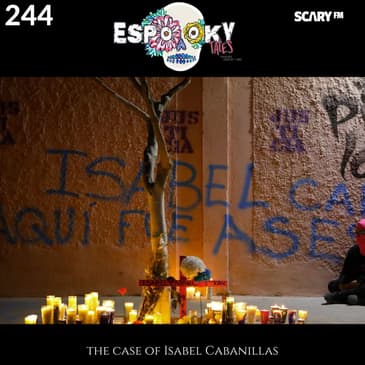
Hi, this is Christina and Carmen and this is another episode of Spooky Tales. The podcast for all things is Pooky Myths, Legends and True Crime in Latin America. And like we said last episode, we are highlighting femicides this month of March, and so this whole month is going to be depressing and today is no different. Nope, it is no different. Normally we have a listener story, but for these episodes where we're discussing femicides, we're saving listener stories for when we stopped doing the so after the month of March. But if you have stories that you want to send to us, you can email us Spooky Tales at gmail dot com. Dm us the comment all those ways, call this Pooky Hotline. Although after watching undertone, I may not listen, So yeah, okay, and onto today's topic. Across from the Machila Dora Industries headquarters in the Loma dell Alta area of Suda, Juarez, there is an open field and before talking about that field, let's talk about Juatis Quadis. This part of Mexico contains the most Machila lauras in all of Latin America. And for those that don't know, Machilaalura is like a factory, and so yeah, Suda Quatas has the most maculadoras in all of Latin America, and it also has the highest number of deaths in Latin America. I think it's gone down like right now, but at one point it had like the highest and this is due to many reasons, mostly the drug war and the proximity to the border. That open field across the Machilalora industries is a memorial site today. In it you'll find these big pink crosses. There are eight of them, and those pink crosses were originally put up as a memorial to eight women who were found dead in this field where the memorial is located, all of them having been placed there at different times throughout the years, but all with signs of having been raped and tortured. Their names were Esmeraldara Montreal, Laura, Berenice Ramos, Monares, Claudia Ibelle Gonzalez, Maria the Los Angeles A Costa Ramirez, Maira, Juliana Reez, Solis, Madeleine, Elisave Rodriguez Signs and Maria Rosina Galicia. All were between fifteen and nineteen years old. Oh my god, I didn't know there was like underage under drumons on a word stop it. I had to correct myself. I didn't even notice underage girls. I didn't know there was under age girls among those. Yeah, I guess fifteen twenty, oh wow, but still very young. Yeah. Very Claudia Evel Gonzalez was twenty when she disappeared on her way to work at a Machaila Dora on the afternoon of October tenth, two thousand and one. One month after Claudia went missing, police handed over to her mother a bag of bones, which they claimed to be claudia As remains. Oh my god. Before that point, though, they there was zero effort to search for her. Wow to do their jobs. Is Merela Herrera Montreal, who was fifteen years old when she disappeared on her way from her house to a house where she worked at as a maid. Her mom reported her missing one day after, on October thirtieth, two thousand and one, but again the police made zero effort to search for her until her remains were found a month later in November two thousand and one, and the police actually told the family of Esmeralda to look for her themselves while why this is like the unteenthed story where or a case where we learned that the police told the family members that, yes, and they suggested that she probably was like she had gone off with her boyfriend, which is what they always say, Yeah, something of the sorts. For Laura Berenice Ramos Monares, she was seventeen, a high school student when she disappeared. One month after her family reported her missing, the police again began to try and search for her. A pattern. Yes, one could say this is a repeating pattern for the rest of the young women who were found with Esmelda, Laura and Clauia. And it's not just these eight women who were found in two thousand and one. This has been a repeating pattern for many of them, the victims in student quadas for decades. This monument was originally made for these eight, but it now has become the memorial site for hundreds of women who have died in aquadis. I will also add here that the families of these eight, they kept fighting and fighting for justice, and the case ended up going to the Inter American Court of Human Rights in two thousand and two, and it took them seven years to reach a verdict, but they did so in two thousand and nine, and part of that ruling was that Mexico was accountable for the murders, that they failed to protect these young women slash teens. Then they also failed to do their job to solve these murders, and so they the state or the government, was ordered to pay the legal costs to the victims' families. They were also ordered to reopen the investigations. They were also ordered to vestigate the government officials who were accused of obstructing justice for all eight of these cases. And this really obligated in Mexico to build a memorial site. Oh so that's how the memorial site came to me exactly. But of course, during the memorial site opening ceremony, the family is protested, and they interrupted the ceremony with posters of their loved ones, candles, flowers, and they chanted vivas celas javaron, vivas las queremos. They were taken alive. We want them back alive, and no kemos un monumento. Yes, we don't want a monument, we want them Yeah, and like, yeah, it is their right to do this, of course, yeah, I mean, like how long they had to fight for justice, and probably this just felt like a like a band aid, like you know, type of solution. Like, Oh, everything's good now look at this memorial. Yeah, because of reality, I mean, like what can you do? You know, Like, yes, a memorial to commemorate when on their lives is good and a starting point. But these families were ignored, the victims were blamed, you know exactly, And I could not find the what ended happening with these cases if they were like reopened back in two thousand and nine when the ruling was made. I did find that in two thousand and three there was a commission to investigate the murders, like commission created, and that back when the women were discovered their bodies were found in two thousand and one, there was two bus drivers arrested, but one of the bus drivers died in prison waiting trial and the other was released due to lack of evidence. And yeah, there's like ample evidence that these men were innocent and unjustly arrested just because they were looking for someone to blame. Actually, did you listen to that podcast? That is actually my next point here. Their lawyers also said the men were tortured into confessing, which they most likely were tortured into confessing and then and then these lawyers were both gunned down and seas they were both And so yeah, there's a podcast, the one Carmen was just about to mention, called Forgotten Women of Watas. It's eight episodes long. There's a Spanish version and an English version of each episode. It covers everything that I'm mentioning right now. It covers it in way way more detail, like across the span of eight episodes that are each like forty five minutes long at least. But the consensus is that, yeah, these men were scapegoats and that there was actually a much much deeper cover up going on that probably involved with police, cartels and politicians, and possibly that's still the case, that there's still like some sort of cover up. Sure they politicians, police and the cartels, because yeah, there has continued to be deaths and murders in this area, and that's been the case for several victims and moment that we've covered. Yes, like we talked about Esmeralda Cassilloon in episode one hundred and nine. This happened in zul Cuares. We also talked about Maricella Escovedo or Thiz in episode sixty four, and both of these remain unsolved. When you look up femicide in sul Cuares, you'll see that more than five hundred women were killed between nineteen ninety three and twenty eleven, and that's like the first official statistic you come across. But that number is now in the thousands, and we can't talk about any case in Sula al Cuares without talking about the machilaas. A study was conducted in two thousand and eight on the femicide database from nineteen ninety three to two to one thousand and seven at the Colegio la Frontera Norte, which documented incidents of femicide in the city, and that's where that statistic comes from. Of the various different kinds of murders that were analyzed, the study found two common patterns in the data, which were classified as intimate femicide and systemic sexual femicide. And intimate femicide refers to women who were killed by men that were close to them. Intimate femicide accounted for thirty point four percent of the murders of women and girls in those years nineteen ninety three to twenty eleven. Systemic sexual Femicide refers to systematic patterns in the killing of women and children, which includes kidnapping, sexual violence, torture, and body abandonment in areas such as garbage dumps, sewage ditches, literally just streets or like desert areas. Oh, actually, I will add because while writing about all this, like last episode and this episode, I came, I kept coming across femicide and feminicide. And since we're talking about femicide right now, do you know the difference between those I've heard feminist side, but I couldn't tell you, like from the top of my head, like what the difference is. Okay, So femicide has become like the murder of a woman because she's a woman, Like that's the general, most basic definition of it, and feminicide is the same. But then you add on like an intentional state cover up, police cover up of that femicide, it becomes a feminicide is the most accepted term. So like last episode, that was a feminicide because the cover up that they tried to do, yes of the more locuture. Yeah, I couldn't remember for a second. So yeah, that's the difference between those two words. But more often than not, they're used interchangeably anyway, because they're so tired together exactly exactly. And while there are many factors contributing to femicides, like machismo and Mexican society, more importantly like the rise of drug cartels, which one of the biggest factors to the rise of drug cartels was NAFTA. Okay, I was waiting for you to bring up NAFTA. I know you were. I was like that meme, yeah, the one with the vein. Yeah, yeah, that's Carmen. So NAFTA is tied to both the rise of drug cartels, which we actually talked about in the other episode, which with the truck drivers and the migrants in the truck, because that's also tied to NAFTA, right, Like NATA was just like, yeah, the rise and I forgot what the term. What's called about commercial using commercial trucks to smuggle migrants? Yeah, it was like the mass. Yeah, mass something. But it's tight to NAFTA. Also tight to NAFTA, like we said, drunk cartels, but also the rise of machilaus. The reason there's so many factories is because of NAFTA, and so in nineteen ninety four, the North American Free Trade Agreepment NAFTA created the largest free trade area in the world, integrating Mexico into an international trade trade block characterized by neoliberal economic policies. This happened under the leadership of President Carlos Salina Zecortari, another neoliberal presidency. Mexico implemented a series of free market oriented policy decisions intended to stimulate foreign investment. And like foreign investment, it sounds like it would be good, like it would be beneficial. It never it never works out to make deals with especially in. The United States. Yeah, or maybe when we talked about because we we oh it was in Nata that I talked about then, but when we talked about the history of board patrol or I studies unknown. And one of the led to. A shortage of food was because Mexico made a similar kind of like business deal with the United States and then they started all the food that normally would go towards the people. And then this is like the most generalized version, but they started sending that to the United States for whatever. I think it was like a war for I remember exactly. But then it led to like famine in regions of Mexico, which led to more migration, which led to bar patrol strengthening. You know, whatever just never never works out, it really never does. And so this new NAFTA, it attracts it. It was like promised the absence of tariffs, and so many were like this sounds great. Many US owned corporations were like, wow, this sounds great, right, and so they began making these factories makilavas in Quadis and there was a pretty exact and you know what, sorry, let me just add something really quick, just because like so we know, NAFTA didn't really help out anybody in Mexico except like the rich. And it was the same thing in the United States because this led to a lot of companies moving manufacturing away from the United States. And that's why whenever like, oh, we don't make things America anymore, well, yeah, that's because of capitalism, man, Yeah, it really is. No, because that's what I was going to say. US owned corporations then began moving their factories to Quatis, like Ford Mattel, General Motors, and IBM or a handful of the corporations that moved to the Quadis maki lavoras during this time period they made over three hundred factories in Quatis, and the availability of cheap labor made it more attractive to them for just for them to just close businesses here, factories here, and move them down there. And because of all these factories opening and the job opportunities, many from other parts of Mexico fluttered into Quatas, especially women like single women who needed to make a living, were like, well, there's work in Quatus. An academic named Catherine Pantaleo, I like this quote of hers, so quote NAFTA as a capitalist approach has directly created a devaluation of women and an increase in gendered violence. And you know what that is so poignant. I can never say that fucking word poignant. You know it's because I can't say it because I was listened to in an episode of five to four and they make fun of Amy Cornogard name co something buried, you know, the justice because she can't say that word, and they're like, a poignant. Are what are you a cartoon character? Poignant? And I'm like, fuck, I can't say that word either. I see. I never try to say the word, but it's on the nose. It's just it's so fitting you know. But yes, this quoe is so on the nose. And that is why boss. Girl feminism, capitalists feminism, white woman feminism. It doesn't work because it only represents the rich women who, on their path to becoming rich, step on every other woman out there. You know what I mean? Yes, yes, So NAFTA was implemented and or began established whatever in nineteen ninety four. From nineteen ninety four to two thousand and one, the homicide rate for men increased by three richard percent, while for women increased by six hundred percent. Wow, I didn't know that the homicide rate for men also increased. Oh yes that yeah, border town violence. But that makes sense, like non, like it affects all genders, but women are the most affected. But yes, men died too, of course. Yeah. Since the increase of the Machilagra factories, more single women with families to raise moved to quadis And because of like the time work starts and ends, they're often walking alone getting to and from work, right, and so that could be one of the many reasons for the increase in murders and disappearances. The highest number of femicides recorded in Uarrez was after the start of Felippe Calderon so called. War on drugs. Of course it was which we have I feel like we've discussed that. I feel like we've mentioned it here and there. But basically it it led to so much more violence. Yeah, which is why like war on blah blah blah, war on this war on the cartels, like that doesn't ever work. Yeah. In twenty ten, there were three hundred and four murders of women. During that time period. There was a rate of sixty femicites per one hundred thousand inhabitants. Wow. The arrival of the military and federal police made gender violence even more higher, Like it increased. Yeah, because I'm sorry, but wherever the military goes, there's any increasing violence. Oh my god, I was just going to say that. Wow, we're like on the same page. This applies to all militaries. Yeah, but the United States more than any other. Let me clarifying them. Let us clarify that in the global South, that violence is at the hands of the US military. Okay, So whenever, like during this time period, when there was a death of a woman that was like found, you know, it was always attributed to oh the cartels. Oh, the cartels, and oftentimes women themselves were like said to be involved with organized crime and that's why they were killed. And it's just it's just an excuse. And I think that people want to believe they're not next, or they would never be next, you know, and so the ethmic excuses and be like oh boss and zo yeah again and keepasa when that's not the reality. The reality is that any one of us could be a victim of femiciety. You know, yes, mm hmm. And just as a state, because when I were talking about suit Aguadas, but as a state in all, like Chihuahua is the state with the second highest rate of sexual assault against women wow in Mexico. According to official data obtained through information requests to learn about the situation of violence against women in Saguades, from twenty ten to twenty fifteen, there was, thank you, eighteen hundred and twenty three reports of domestic violence were filed by women between the ages of eighteen and thirty five, and only six point eighty seven percent of that number resulted in legal proceedings impunity. Yes yes. During the same period, three hundred and eleven reports of sexual harassment were filed and only eight resulted in criminal charges. Wow. Hello, Hello, this is Christina from the Future. I forgot to mention this while we were recording, but this was a good place to mention it because it involves what is. A little bit ago, another batch of Epstein files were released, and Mexico did not escape being named, particularly suad What is These are unverified allegations that were leveled against Earl Anthony Wayne, who served as the United States Ambassador to Mexico from twenty eleven to twenty fifteen. These allegations come from a twenty nineteen email written by a man named Kenneth Darryl Turner, and in the email written by Turner to the FBI, he wrote, quote, you may want to question the ex US Ambassador to Mexico, mister Earl Anthony Wayne, about his involvement with an underage girl when he attended and was arrested by the federal police. And so he mentions this alleged arrest that occurred at a twenty fourteen party in two Aquadis that was allegedly organized by Epstein and Richard Marcinko, a former US Navy seal commander who is now deceased. In the same email, Turner claims that Wayne, the former ambassador, was sentenced in Mexico in twenty seventeen to a life sentence for impregnating an eleven year old girl, but that in his place an ex US marine served the sentence as part of an agreement worked out between the US State Department and a judge in Mexico after a huge payoff. And again there's no evidence for that. But that also isn't the only time that Wayne, this former ambassador appears in the EPSTEIN finals. There's a twenty nineteen FBI document with information provided by Turner to the FBI where he says that the USA mbssy in Mexico City was raided by Mexican federal police in two fourteen while Wayne was there. And Turner also said that the ambassador left the country immediately, which that part is true. He did leave like suddenly. These emails from Turner to the FBI also mentioned an alleged vault containing approximately ten thousand videos of miners and this is all alleged, all coming from the same person, Kenni Daryl Turner. But the part that is true is that the ambassador did suddenly leave Mexico in that year that Turner said twenty fourteen. And since the Epstein files have solely been released, people have been mentioning Epstein also because of his ranch that is in New Mexico, which is very close to see that Aquatis. So you can read these emails yourselves. And again it's all alleged and not verified information. Okay, back to the episode. All of this information leads me to a case that I wanted to bring attention to thanks to a listener who suggested it, the case of Isabel Gavanias de Latore. She was born on May fifth, nineteen ninety three. She was an artist like she did murals and like art on clothing that she then sold, and very active with her art on Instagram. And she was so well known in the community. Every food vendor, specifically burrito food vendor is apparently he we so she must have really loved burrito. She was also an activist with a group called Messa de Mucherez. This group focused on gender violence. She was also a member of Puro borde In art collective in the city, and this art collective their statement was like to take back streets that had been taken over by the Natco War. Through art. So they just like spread colorful art to contrast the violence. And some of her murals can still be found in Judas. Wow. And she was also a member, like a member of so many things. She was just very community or oriented. Thank you, that's the word. Yes, okay. She was also a member of Kassu Makileira Madre And this wasn't antiq or is they're still around. This isn't antique. I've heard of them, have you? I don't know that, but yeah, an anti capitalist feminist collective Fromas. Most of the members are daughters of factory workers, hence the name, and this includes Isabel. Most of them wore first generation what is so their mothers all came from different parts of Mexico to work in the Macas and so many of them were also the first to go to university or graduate from university, including Ishabad. She was also a mother to a four year old son. In an interview that I found of her before she passed away, she was asked about her art and like why she began to paint, and she said that she wanted to show her son that they can make beautiful things even when things around them aren't so beautiful, they can make beautiful things themselves and to inspire him. But she also felt that it was very important to use her art to call out injustices. She was carrying empathetic, strong, smart, also described as so funny. Her friend Marte said quote, she had what I'd call white humor rather than black, a pure humor, simple and sensitive. She laughed and made other people laugh end quote. Man Carlos, an elderly regular Elane's bar in downtown wat Is, described her as charming and as someone who took time out of her day to chat with everyone, including like more ignored people, like older folks. Another friend and fellow artist said quote, we want to understood that what Isaibad was doing was rebellious in what is in the Machista city. She was occupying the streets with art. She was riding her bicycle home alone at night. She was subversive of patriarchal culture. She joined us to fight patriarchal violence in our own ways, her own way. This is making me so sad. She just sounds like this amazing, beautiful, joyful person who wanted and deserves a life free of violence, as all people, but especially women and children, who are the main victims of violence at the handsome men. Actually men are also victims of violence from the hands of men. They are also victims of the patriotchans. We have said. Many chahs and people like her are targeted by men who don't want to change their ways because they want to be in control. So it's sad to see such a beautiful light be I don't know, stamped out by machismo in violence. Yeah. Yadira Cortez, a spokeswoman for Messale Mouchres, which she was a part of. Sevan Isabel's death had the community obviously so angry, But she said about her quote, she represents us because she's someone who raised her voice for justice, for the prevention of violence against women, and for the opportunity to do community building through culture and art. Her murder has refocused attention on the fact that women are constantly being murdered in this community. End quote. And I'm going to get into the date. But like for a while, all the murders that were happening in Aquatas were like the attention of like mediap podcasts like h what the fuck are they called? Crime Junkie did an episode on the women of Quadas and they probably plagiarized from the other podcasts. They probably did from the one we mentioned Forgotten Women of Quatas. And they say that because they have been known to have plaiarism issues. I'm not just being a hater, okay, but no, they do have a history of plagiarizing. Anyway. Yeah, and then it was like not talked about for a while except if you're Mexican, and yeah, and you're either if you're Mexican or if you're like in at Baso and obviously are very close in proximity to Aquadas. Actually, I think that's where I heard about her and this organization, because Cassandra from Bitter Problems every so often goes to Quatas and participates in groups like that, and she does like a ride from at Bascos Aquatas and it's like part of like one of these groups that organized it. And I remember she talked about her friend that was killed and I'm pretty sure it was her. It could have been someone else because this is common, but I sort of remember that. And she was a big bike rider, so that's why they liked the Like memory triggered in my brain when you mentioned she was riding her bike. Yeah, so, and like for us that who either paid attention to what's going on in Mexico. This never went away, but in a lot of places it vanished from like the media. And so after Isabel was murdered, it felt like it brought back the attention to the femicides in cua Aquadas that had gotten forgotten again, you know. And like we've been saying this episode, e Sabad was intersectional in her activism. She defended women, immigrants, and the environment. Like whatever the cause she was, she stood behind it. Just before her death, she was preparing protest art against the Canadian company that was trying to open a copper mine in Sala Mayuka, south of where she was, not in the same place. She also had told her friends that she felt like she was being watched, and a lot of her art really focused on the eyes. She told her friends that she wanted to demonstrate they were all being watched. And one of the murals that you could still find in Sia quad Is is a self portrait. There's flowers. I put the picture and I'll upload it, but there's flowers underneath, and then there's her head outlined by like a brighter greenish blue, but the eyes are missing. Yeah, and then behind that is purple and eyes everywhere. And then in the upper corner it says the Obzervan they are watching, which just feels I don't know, it's it's eerie, definitely, it's a powerful image. Yes, it really is, and so I. Saibed had been hanging out with her friends at Elhenno's bar in downtown Quadis on January eighteenth, twenty twenty, and just past midnight, she said goodbye to her friends and got on her old three speed road bike. She made it less than three blocks when a bullet hit her in the head. Wow. And she was shot one more time in the chest. Wow. And this happened like again January eighteen, twenty twenty. By the time she died, there had already been more murders than days of the year. That is too much, sixty four murders to be specific. Her friends reported her missing the next day, but by the time they reported her missing, the police had already found her around three in the morning. So like, it all happened very fast that they found her and she was yeah. Found next to her bike on the floor. There was two bullet casings her bike was also fallen over because this was a Friday. So then the Saturday after her death, hundreds took to the streets to protest, and then the following Sunday there was nationwide protests in all of Mexico calling for justice. And none of her close friends or family believe that police would properly investigate, Like when they were asked about like, oh, do you think they're going to solve this murder, they were like in this town, please like here, no one of them. We even said, like impunity is the law here, which you mentioned immunity earlier. And to this day her case remains unsolved, and on the anniversary of her murder, people still gather to call for justice, and on her birthday there's also like an annual bike ride for her to commemorate her. And like what makes us worse is like there was cameras near where she was found, and like they kept saying, well, there's cameras, hero, how do you not have like information? Because for such a long time there was no updates on her case at all, and so many believed that she was specifically targeted. And it feels very like very execution style, like a shot teacher in her head. Yeah, yeah, and only twice. Like it feels to me like the show's targeted as well for her activism, probably right right. Five years after her death in June twenty twenty five, she wound by staying. Investigators searched three residences in what is from these three searches, a fifty two year old man was arrested for firearm possession, but they never released like names, who was searched, Who this fifty two year old that was arrested, who he was? Nothing was ever made public and the only things her family and friends were made aware that the searches happened. But again they don't know who, or well or. Any They don't know anything more than that. Yeah, when these searches happened, her mom, Rena de Lare, said, we are happy because at last we see in advancement in my daughter's case, and it's in expectation we have in our soul that soon things will be resolved. And at first prosecutors told her that they believe these abil's death was drag related, which she was like, she wasn't involved in any of that, Like. What do you mean that doesn't make sense? No, And she was the fifth woman murdered in twenty twenty, but the same day her body was found, another woman was killed on Juannas Avenue. Wow, and this is the street that leads to Basil Le Norte, to the Basila Norte part of entry to Basil in Texas. And I forgot to type this out, but this is like not confirmed at all, but her friends specifically which link was it? Her friends are specifically wondering or curious about. There was an organization of like men's rights that were active on social media. They think that's linked. Yes, because the leader of this social media men's rights group, that guy posted like a very weird and violent video like just like talking nonsense really on social media, talking about like men's rights and like how women are all this and that and that. That guy posted that like just before she was found dead. And so her friends believe this is related. But there there's no like official correlation between the two. I mean, it wouldn't surprise me, not the first in cult type who's killed women like that other fellow here exactly, Yeah, masterful And actually that is how they described the group, like an insult type yeah, and sounds like any Yeah, both men's right activism is not really having anything to do with like any supposed like injustices against men, you know. And now I say suppose it because in their eyes like things that are not actually issues or issues, you know what I mean. Obviously there is issues that I'm in face, but most of those issues are caused by patriarchy itself, which they would never admit, you know. Yeah, they just want to maintain control. Yeah, yeah, and so they think that that is involved. That wouldn't surprise me, It wouldn't, It really wouldn't. But yeah, to this day, it remains unsolved. Wow. And yeah, that was the a little bit about the Machila loas, the femicides and quatus and the case of cyber. Yes, well, I won't say it was a great episode because it's obviously hard subjects, but I did like all the context and because. It's all tied together, you know, Yeah, it really is. And I think because of the marches that happened in Mexico every eighth March eighth, and because we are half Mexican, I focus a lot on Mexico in these episodes that we do about vemicience. But it's worth repeating that it is not Mexico alone, right, this is an issue across all of Latin America and the United States. And actually, if you if anyone has listened to or goes to listen to the women of Whatest episodes in that series, there was a mention there was like a retired FBI guy I remember his name, and I'm so sorry, but because this is off the tope of mine, but there was retired of BING guy who went to help them when these women were found. And this guy FBI guy theorized that like a certain number of the hundreds of women who were found in quadis like in those like a certain amount of years. He was like, this is an American serial killarassing into the border. And there was a some sort of Mexican like detective as well, or I don't remember what his position was who agreed with the FBI guy, but he thought it was someone local. But I don't think it's a stretch to believe that someone crossing frequently, even if they're American and not Mexican, would know the area very well. Because the Mexican investigator was like, well, it has to be someone local who knows the area and knows where to leave. All these women, so he didn't agree that it was American, but he did think it was like this one circiller who did a bunch of these, but not because there's so many. And then the same podcast also theorizes that a lot of them were just like linked to cartel members doing this, even if the women themselves were not involved in the cartel. They were like seeking these women out as another but it could be both, you know. Yeah, Plus there's there was a lot of harassment and sexual assault from employers ad as macedels, so that's like an aspect that's tied to this as well. Yes, exactly exactly, So yeah, that was. This episode. Well, I bet repeating feminism saves lives and we should all be feminists because as long as we continue to live in rachismo and not fight against my chismo on the patriarchy, then things like this will continue to happen. Actually, while we're here and your you just said that, I want to add one thing that brought me so much joy to see was a video on Instagram and that I came across. Actually you send it to me that I came across that you sent to me, Carmen, Yes, old Senoras, older senoras, all saying it was their first time at a. Women in their sixties. Yeah, at a protest Marso protests and yeah. I think there was like six of them in the video who were all interviewed and they were like, yep, this is my first time and I'm here for and they all had different reasons, but yeah, they were all there and. One of them her daughter invited her. Yes, yeah, and that's that's. Beautiful, beautiful m hm. So yeah. Other than that, we'll catch you next time with another very sad case but that we all need to know about, you know. So yeah, bye bye. As Book Tells is hosted by Christina and Carmen, produced and edited by Christina, researched by Christina Carmen and with the help of Don Shout out with Don. If you aren't joying the podcast considerably, going to say five star review, we would really appreciate it. If you don't want to the five star review, just don't leave a review, but don't eave anything lower than that, please, I'm just kidding. You can reach out to the podcast at at spoaktos at gmail dot com. You can go to our website at bookitos dot com and fill out the contact form. If you want to support the podcast, you can join our Patreon where we send exclusive stickers, have bonus episodes. Eight dollar members get an exclusive key chain. It's super cool. I got new ones and these ones are huge. And if you want to support but you can or don't want to join the Patreon, that's fine too. You can also get some merch. You can find sure Sessay, Spooky and old English letters. There's a beanie. I love the beanie. There's also a hat. There's a no My Miss shirt which is a fan favorite. There's a lot of options, crap tops, sweaters. It's almost swetter weather. We're nearing a spookie season, so yeah, get your hoodies. You're gonna need them. If you don't want to do all that, that's fine too. You can just listen like you're listening now, and that's the best support that you can give us, like I always say in our ad break and yeah, if you like history, you can follow Estodia's Unknown Mining, Carmen's other podcasts, and you can find a Spooky taels on all of our socials at a Spooky Tells All. This is in the show notes, and we appreciate every single listen. Thank you so much, stay as spooky