
You can find Edwin social media as @edwincov
You can get these ad-free through ScaryPlus.com free for 14 days, then 4.99 per month. Cancel anytime.
Find out more about Horror Story on HorrorStory.com
Join our community:
Youtube.com/scarystorypodcast
Facebook.com/scarypod
Instagram.com/scarypod
Visit and join our newsletter for more:
Scary.fm
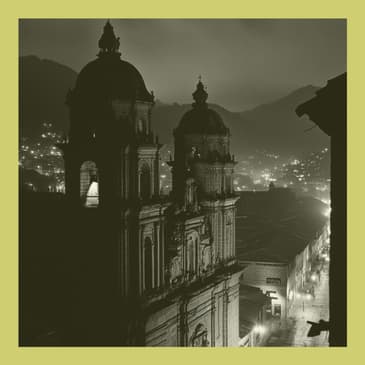
It's the cult night of June sixteenth. That's because it's five days before South America's winter solstice. Tonight, we're walking the streets of Cusco, Peru, the old capital of the Inca Empire. The city is eleven thousand feet above sea level, so it's no wonder that it's barely above freezing. Of course, it's the perfect weather for a ghost tour. Our meeting spot is the Plaza de Armas, the main square in Cusco. The square is pretty busy tonight. June as a whole is a busy month for the city. There are parades almost every day leading up to June twenty fourth. That's when the people of Cusco celebrate Inti Raimi, a festival of the Inca sun god Inti, and it's why the city is packed with people. No other place is more active than the main square. Earlier today, the Plaza de Armas was flooded with people watching and participating in the Dispile de Lerias trade put on by the universities of Cusco. There are other annual parades put on by elementary and middle schools. There are also concerts and rituals. There's even a parade of dogs but past these happy festivals, parades and celebrations, you'll find historical tragedies and unexplained mysteries all over Cusco, in the alleyways and shadowy corners, even in the heart of the city, in the middle of the beating drum and pounding feet. You look too closely, and you'll never be able to see the city the same way again. As many of you know, I spend a lot of time in Cusco, Peru, and for today's episode, we have a special tour Cusco at Night. My name is Edwin and here's a horror story. Back in Inca times, the Plas of the Atamas was part of one massive meeting place. It was big enough for the whole Inca army to gather and hear announcements from the emperor. When the Spanish conquered the Incas, they divided this huge plaza into three smaller ones, Plaza de Armas, Plaza San Francisco, and Plaza Regocijo. We won't be heading over to Plaza San Francisco tonight, but the other two have more than enough stories to make up for it. Plasadregosijo has a dark past. They used to publicly hang people there. Our tour guide Carlos, tells us that Plaza Regocijo in English means Square of joy. The Spanish called it that to highlight the square's dark purpose. But of course Plaza a Regocijo wasn't the only place where executions happened. For treason or for trying to kill an authority. Executions didn't happen here. They were reserved for the big Main Square, And maybe the most ruesome execution that ever took place in all America happened there seventeen hundred and eighty. That's Carlos. He's referring to Tupac Amaru Segundo, the second Execution. Tupac's birth name was Jose Gabriel Condorcanki. He was a local indigenous leader, a position that once belonged to his father. The Spanish did not recognize Tupac's authority, only their own. With the Spanish raised taxes on the indigenous Peruvians, Tupac tried to convince them to change their minds, but they refused, so Tupac had to do something else. He arrested a local Spanish official and sentenced him to hanging, and this began the rebellion. Which Tupac and his wife Mikaela led as a rebel leader. He took on the name Tubac Amaru, the second after his ancestor, the last Inca emperor. There were about six thousand people in the rebel forces. In November of seventeen eighty they captured the town of Sangarara, but the Spanish recovered quickly. They began overpowering the rebels, and in April of seventeen eighty one, Tupac and Mikaela were captured. Someone betrayed them and the two of them, along with several other rebels, were brought to the Placa de Armas that were going to be tortured and killed. On June sixteenth, twenty twenty four. The plata is full of shouting and dancing. People from all over the country and the world are enjoying the Cusco night life, so it's hard to imagine that on May eighteenth, seventeen eighty one, so many gruesome deaths took place right here where we're standing. On that day, the square was silent. Only the readings of the rebels crimes were heard, followed by the screams of agony. Tupac and Mikhaela's family and friends were killed first. Some got off easy with death by hanking. Others suffered a much more painful death at the mercy of a device called garotte. Well this gives you an idea, right, this device is not meant for his strangling people. That would be no fun. This device fur pierces through your spine, causing ferendo spain at the executioner has a very good grip, keeping off for a very good show by moving the handle and releasing the handle right eventually until well, your neck snaps. Nikaela was one of the unlucky ones. She had to endure this device, and the worst part was that the garotte didn't work on her unusually thin neck. The executioner strangled her with a rope instead. Tupac faced execution last. His arms and legs were each tied to a horse, and then the horses pulled in different directions in an attempt to separate his limbs from his torso. Somehow Tupac survived this. So the Spaniards manually chopped off his limbs and then beheaded him. They weren't done. They sent his arms and legs to his hometown to serve as a warning, this is your future if you dartify back. They kept Dupac's head. They put it on a steak and placed it in the square, and tonight a festival stage stands where Tupac Amadou's head would have been. Only Tupacs and Mikhaela's youngest son, Fernando, was spared, yet he was still forced to watch the brutal deaths of his family members, perhaps a fate worse than death. Clements mark him. A British geographer and traveler who witnessed the executions reported that Fernando quote uttered a heartrending shriek, the knell of which continued to ring in the ears of those who heard it to their dying day, A scream he could never forget, never run here, one that would haunt those who heard it for the rest of their lives. We don't have to walk far for our next stop, just a few steps to the imposing Catedral Decus School. There are a few stories connected to this cathedral. The verse is about a man named Rodney Colin, who died here on May third, nineteen fifty six. Look at this young guy over here. This is Rodney calling Rodney Cling lived in the fifties. He was a British. He was British, he was an Englishman. Carlos is pointing to a small metal plaque on the stone street next to the cathedral. Rodney's story gets more interesting when you know the history of mari Angola. The largest bell in South America is located in one of the cathedral's bell towers, and it was named after the daughter of a wealthy Spaniard living in Cuscoo in the mid seventeenth century. According to legend, Maria fell in love with a commoner and nobody, and even though she was engaged, she was in love with another. She became pregnant with a commoner's child. This made her father angry. He challenged Maria's lover to a duel, but her father lost a duel in his life. Madia's lover promised to marry her after he returned from Spain with his inheritance, but this never happened. His ship sank and he was lost at sea. Now alone in the world, mariaf led to a convent where the nuns gave her shelter. To repay them, Maria used her father's money to pay for the bell and the very one in the tower where Rodney stood before his death. Some say Rodney didn't trip and fall, but it was Maria's ghost who pushed him off the tower. Rodney Colin was buried in a cemetery next to the cathedral. The cemetery was the first one built by the Spanish in Cusco, and it seems that not everyone buried there rested in peace. The creepiest story about the cemetery was reported by a nineteenth century Peruvian writer named Clorinda Matto. People used to be buried here in the eighteenth century, but then not very bad. It was a very bad pandemic that arrived from Spain, some sort of flu that started killing the neighbors there so quickly that two workers in charge of burying people were overwhelmed. There were so many dead bodies coming in at the same time that the best solution was making a big hole in the ground and just dumping everyone in. There were tossing bodies into the pits because there were so many of them that you didn't know who it was that you were throwing. If a certain body was claimed, then that person might have gotten a better burial, but many other people simply weren't. There were a lot of vendors, traders, people that lived out in the streets, and they all ended up at that pit. They say that one day there was a priest that was reading the Mass to a bunch of Catholics when suddenly they started hearing sounds. The priest pretended that everything was all right, so he continued with the mass, but eventually things started moving on the altar and people got up from their seats and ran away. The priest was left behind, and of course he tried to keep people in there and then calmed them down, because you know, that's how they used to make their money, by providing these speeches to people and then you know, get whatever they provided. So of course there was some competition, which is what this priest was suspecting. So he was like, oh, no, someone's messing around with my stuff. Someone's playing tricks with people so that they go to another church. So he hired a young soldier and told them, I know somebody must be hiding some threats something here that's scaring people off. I need you to find whoever's doing this because they must be hiding somewhere in the church. And the soldier was like all right, I'm going to spend the night in here. And so he was locked up inside the church. The next morning, when the priest came back, he found the young man unconscious and he said, no, this place is really haunted. To take your money, I'm done with this. He was completely shocked. He said that all night long things, objects were moving around the church. He said he heard chains being dragged on the ground. And the priest said, all right, well what am I going to do? And the two workers, hearing people call them, they said, hey, come over here, there's something I want you to see. These were the two workers that were in charge of burying people. And so the priest approached the pit and he saw that there was a hand that was popping out of the ground. It was a dead man's hand, and right from the hole where people were being tossed and covered with dirt. That hand was sticking right out. People knew it was being tossed and covered with dirt. There was a hand coming out. The priest ordered that this hand be covered with dirt. It was covered three times, and every time it reappeared, it's bony fingers reaching toward the sky, toward freedom. After a while, the priest gave up. He had the hand chopped off and shipped somewhere else. But once the hand was removed, the haunting stopped. To this day, we don't know who the hand belongs to or what business they still had in the living world. Moving on from the cathedral, our next stop is Limo, a cocktail bar in Peruvian fusion restaurant. It is located on the outer edges of the Placa de Adamas. Although Limo is one of many restaurants lighting up the square, its history is pretty unique. The building used to be the home of the wealthy Montes family in the second half of the eighteenth century, and in a way it still is. To a legend, there was a very wealthy guy living in Cusco Bakid the seventeenth cent. Durack in the seventeenth century. His name was Seperino Montes. Sefarino was a trader. He used to buy products from Murubamba Valley and sell them in Cusco. He used to move products from Cusco and then take them to the south and then sell them to the villagers. He had a very beautiful daughter named Margarita. She was fifteen years old. That was pretty much the age when they used to get married back then. But anyway, people also didn't live that many years back then, so there was this guy that was very interested in her, the Archbishop of Cusco, but he would keep his secret to himself. One day, the archbishop realized that he was going to be sent out to some other country, so he said, I'm never going to get to see Margharita again, so it's now or never. So he brought out a plan to be left alone with her somehow. So one day he talked to the ose Seferino about it and told him, hey, I just found out your brother had a terrible accident. I'm a priest, I know everything, so I would suggest to go and see him. His brother lived in a town about two hours by car now, so back then it was about two days that would be by riding a horse. So he said, all right, I need to go there. But it was a weekend and he had no servants that day. But the priest had it all figured out. However, when Seferino was going out of the city, he said, i'm he came across his brother, so he asked him, hey, I thought you had an accident, and he was like, no, I'm okay, So he turns around, goes home and then catches the priest trying to take advantage of his daughter. He was so angry that he grabbed a dagger and killed him. The priest started screaming so loudly, and everybody figured out something was going on, so they ran to see Nobody could believe what he had done, so they changed the story. He said that they saw the father trying to take advantage of his own daughter, and in order to keep him quiet, he killed the priest. Everybody was so upset that they broke into the house and they grabbed Margharita and they took out her clothes and kicked her out of the house naked. In order to humiliate her. The father was tossed from the window with a rope around his neck, and then once he was dead, he was chopped to pieces. Margharita left Gusco. She moved to Lima to her aunt, and then they closed the entrance to the house with stones. Because this house is cursed, and some people say that this guy's bones still remains. This guy's bon. Bone charks are still in the walkway of the restaurant. If you believe the legend, One of the roads right off the main square is Questa del Almirante, loosely translated to Admiral Street. More literally, it would be Admiral Hill or Admiral Slope, which is fitting. The street is on an incline. Cuesta del Almirante has a legend of its own. The road is named after Admiral Francisco Aldrete, who died in sixteen fifty three. This next short story, we're going to hear directly from Carlos, and by the way, in the recording, you're going to hear some drums in the background, but it feels like some of the real ambients of Acusco is all about. He was better respected and beloved here by neighbors. He was a very big donor of the Catholic church who had one vice gambling. He loved to gamble and play for money. He couldn't lose. Every time he lost, he doubled the bed, but he couldn't stop. One night, one Saturday night, he must have made ultimate bead. We will never know what happened. He was playing with friends in the second level. His friends left and he dressed up with his finest uniform as an admiral, and he jumped from the window from the balconies. He up there with a row book his neck. There is a painting in the regional museum where you find that. You see the guy hanging from that window right with his uniform the road, and you see his head on the ground and people screaming because a lot of neighbors were coming to church the next morning when they came across his human body. And since he took his life, he couldn't be buried in the holy grounds of this cemetery. He was buried in the outskirts of Cusco, like a dog or a cow. Right. But still today this street is called Questa del Almirante they Admiral street after him. Francisco lived in a house at the top of the hill. The window where he hung himself is on the corner, in full view of anyone walking to and from the square. Today that building is the Inca Museum, where the main attraction is skulls. The museum's collection includes Inca nobles whose heads were bound when they were babies in order to make their skulls cone shaped. You can also find the mutilated skulls of warriors. Another morbid part of the Inca museum collection is the mummies. Mommification of the Incas was a way of honoring important people. One such hero who was Mama, was a little girl named Juanita. She was twelve when she was sacrificed to the gods. The farther we walked from the Placavadamas the quieter cusco Getz. Hearing all the stories of death and suffering in the middle of a celebration of the life giving sun is very unsettling. Still, as it gets darker and we walk farther away, we start to miss the safety of the crowds. We were left with only the ambient noise of the city. Then we stop again. It's in front of two luxury hotels. They used to be a cloister and a monastery, a place for monks to shut themselves in and pray in private. There was an underground passageway connecting the two buildings, and this is another place with a lot of stories attached to it. In the nineteenth century, there was a priest who tried to jump between the roofs between the monastery and the cloister, but he fell in the space in between them and died. Not much is known about this priest not even why he jumped, but that's not the worst thing to have happened there. There's a story about something that took place within the sanctuaries. In nineteen ninety seven, the Catholic Church signed off on transforming both the cloister and the monastery into hotels. During the restoration work on the buildings, the bodies of infants were found buried under the passageway. The final stop on our tour is a Temple of the Sun. It was converted into a church when the Spaniards conquered the Incas. Apparently, the passage wasn't a straight line from a palace to the temple, but a labyrinth designed to confuse enemies and potentially bury them alive. The entrance behind the altar has since been sealed to keep anyone else from losing their way in the underground maze. As we head back to the hotel from the Temple of the Sun, we passed by more businesses and churches, most of them are built in the Spanish style. We walk by buildings that have foundations of Inca stone with plaster built on top of it. A mixture of indigenous and colonial architecture. There's another cemetery. Just how many other stories are there about the city. It would be impossible to hear them all during a two hour walking tour blocks away from the main square. Cusco is certainly quieter, but the quiet exposed is the hum of something else, an energy that connects the past and present. It's as if the city itself is alive at the very least I'm dead. What places do you know about that have such a haunting history? Let me know. I'll leave links to everything, including how to support us with Scary Plus in the description of this episode. This episode of Horror Story was written by Tess Redt, along with her original audio and research from a tour in the city. Preproduction was by Christina Lumagghi and hosted by me and Win Kovar Rubiez. If you are following the show, I'll talk to you next week. Thank you very much for listening. Keep it Scary everyone, See you soon.