
Find out more about us on HorrorStory.com and listen to more of our podcasts on Scary.fm
To listen without ads, support us on ScaryPlus.com
Join our community:
Youtube.com/scarystorypodcast
Facebook.com/scarypod
Instagram.com/scarypod
Visit and join our newsletter for more:
Scary.fm
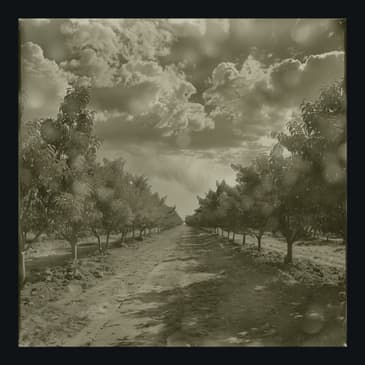
[00:00:01] Goro Kajihiro was walking through his peach orchard like he did every day. He liked to get in the field and meet the men contracted to work on his farm. It was a good spring day, not too cold, not hot, not raining, and he was waving to the
[00:00:17] workers coming up to them when suddenly he spotted something strange. There was something in between two of his trees, something that didn't belong there. It was a hole. He asked the farm workers if they knew why it was there and they just shook their heads.
[00:00:35] They had no idea. And so Goro went on with his day. What he had seen was still on his mind though. When it came time to go to sleep, instead of getting ready like he normally would, he decided to go back out to his peach orchard.
[00:00:50] He needed to take another look at the patch between the trees. And so he got there and as he walked up to the two trees, he was surprised. The hole he had seen earlier had been filled in.
[00:01:06] And so he figured someone had trespassed onto his land, dug the hole and buried some trash. It was an annoying inconvenience but it could wait until tomorrow. He was planning on calling the police. The next morning, Goro met the officers at the hole between the trees.
[00:01:24] They brushed some dirt aside and it became clear. This was not a simple case of trespassing. There was a man inside. And as they continued to dig, the body of a skinny white man was revealed. It was gruesome. The man had been stabbed in the chest.
[00:01:42] He had slashes on the back of his head, at the neck and the rest of it was bashed in. His arms were wounded like he had tried to defend himself from an attacker. No one recognized the man. At least, not right away.
[00:02:01] No one was suspecting this to be one of the most disturbing cases of murders in a county that hadn't seen anything close to it at this scale. And everything started with what was supposed to be an illegal garbage dump on the side
[00:02:14] of Larkin Road and found a body instead. My name is Edwin and here's a horror story. It was a bizarre scene. Rows of peach orchards, neatly organized, flooded by photographers and news crews with massive floodlights for a crime scene investigation. Police hoped that this was a random attack.
[00:02:48] Things like this didn't happen in Sutter County, California. At least not in 1971. Sure things were changing in other places across the United States and this place was no exception. But it did seem to be growing more violent. Across the country, the Boston Strangler murders frightened everyone.
[00:03:07] In California, the Manson Family murders shook the country. Protests and riots were increasing all over the US. It was a scary time for some people. Yuba City, Marysville and Sutter County were growing too but big city problems like murder and riots? Unheard of.
[00:03:28] That's why the police figured the man in the hole was just a random attack. They had found literature in his pocket that suggested the man was gay. This made the police believe that to be the reason for his murder. A hate crime.
[00:03:43] The man in the hole was identified not long after. His name was Kenneth Whitaker. People called him a vagrant. He was known to be homeless. He survived by finding work on local farms and he had previous run-ins with the law. But nothing serious.
[00:03:58] He had been booked for public intoxication and petty theft. He didn't have any family in the area, which was likely the reason why he had not been reported as missing. With this information, investigators figured Kenneth Whitaker had come across his two attackers
[00:04:13] because they were looking for a good time. And Kenneth needed money so they must have picked him up but killed him to avoid paying him. But that's really all they had to go on. There were not a lot of clues left at the burial site.
[00:04:28] Investigators were only able to collect plaster impressions of tracks found near the hole. Hopes to find a guilty party were fading. Four days later, on May 24th, 1971, farm workers were driving a tractor at Sullivan Ranch.
[00:04:45] From the tractor they spotted an area of land that seemed to have collapsed. Ray Duran went over to the spot pointed out by the farm workers and he found a man-sized hole. It wasn't supposed to be there.
[00:04:59] Ray alerted the sheriff and they arrived a couple of hours later with the team. This was more concerning now. Sullivan Ranch was right next to where Kenneth Whitaker was found. Less than a week ago.
[00:05:13] Police arrived and dug up the hole and they found a body of a man inside. It took several days to identify who it was but investigators learned that this was Charles Fleming. He was an elderly man, also known to be homeless like Kenneth Whitaker.
[00:05:29] This started to frighten investigators, ranch owners, farm workers and the locals. Two bodies were found right next to each other. It was more than a coincidence. Investigators widened their search. At first nothing stood out.
[00:05:46] Then a deputy spotted a pathway that led into a weedy area next to a peach orchard. It was along the riverbank and there were several man-sized holes. Worried, the police brought out their shovels and started to dig. That's when they found a third body.
[00:06:04] Then a fourth, fifth, sixth until they had uncovered eight bodies in total. Everyone was shocked and scared. Some of the residents were crying and others vomited on the scene. It was clear now. These deaths were related.
[00:06:25] The eight bodies were taken to the morgue laid next to each other and the work to identify them began. Investigators feared there were more victims that continued to search along the riverbank. They found more graves along the Feather River near Marysville, north of Sacramento, California.
[00:06:43] By June 4th, there were a total of 25 murdered victims found. Only 21 of them were identified. This was overwhelming for Yuba City. They had never seen a case of mass murder before. A small-town sheriff's department with such a huge case that would baffle even departments with huge resources.
[00:07:08] All 25 men followed a pattern. They were between 40 and 68 years old. They were all farm workers, all considered drifters, vagabonds, homeless. No one reported them missing. They had all been attacked with a machete.
[00:07:24] They had all had a puncture wound to the chest and two slashes across the back of the head in the shape of a cross. Only one victim suffered from a gunshot wound. They were all buried face up with their arms stretched above their head and their shirts
[00:07:39] had been pulled over their faces. Some of them were found with their pants pulled down to their ankles and there were signs of assault. The stretch of land where most of the victims were found became known as Graveyard Lane.
[00:07:54] With the discoveries, the local funeral homes where they were being identified were starting to get overcrowded. They had to be sent to a new morgue in Sacramento. It took some time to figure out a timeline of the murders, but it was eventually uncovered.
[00:08:10] Nine of the 25 men were murdered in February of 1971 to early May of that same year. They were Sigurd Emil Beiermann, John Rogo Smallwood, Mark Beverly Shields, Joe Carabo, the four men that could not be identified. 47-year-old Raymond Muchache was likely killed on May 12, 1971.
[00:08:35] Kenneth Edward Whitaker was found on May 19, but the day of his death is unclear. Melford Everett Sample was found on May 21. Charles Cleveland Fleming on the 24th. 52-year-old John Joseph Haluka and 62-year-old Warren Jerome Kelly were found on May 25.
[00:08:54] The next day, 60-year-old Donald Dale Smith and 60-year-old William Emery Camp were found. On May 27, six men were found in the same area. 46-year-old Elbert J.T. Riley, 59-year-old Paul Bull Allen, 53-year-old Clarence Hawking, 64-year-old James Wiley Howard, 44-year-old Edward Martin Kupp, and 58-year-old Albert Leon Hayes.
[00:09:24] 64-year-old John Henry Jackson was found on the 28th of May. 60-year-old Lloyd Wallace Wenzel the following day. On June 4, 55-year-old Joseph Maczack was found. Of these 25 men, we really only know a little bit about one man, Donald Dale Redd Smith. He was a World War II veteran.
[00:09:47] He served in the 16th Regiment of the 1st Infantry Division. He was from Kansas and became a wanderer straight out of high school. After World War II, he made his way to California. He loved the Yuba-Sutter area more than any place he had ever been.
[00:10:02] He spent a lot of time on the skid row of Marysville and Yuba City, and he worked on Yuba City farms for years. He was gentle-natured and was never known to hurt anyone. He landed in hard times after the war, though.
[00:10:17] He had a long line of arrest history, 97 counts in total, for things like being drunk in public, petty theft, panhandling, and vagrancy. Donald Dale's story was tragic but unfortunately not unique. The majority of the 25 men had similar counts against them.
[00:10:37] But as we dive a little bit into their stories, we begin to find a pattern that finally gave police officers some answers. The story continues right after this. Stay with us. When Melford Sample's body was found on the 21st of May, there was a receipt in his pocket.
[00:11:04] It was from a meat market and it contained one name, Juan Corona. Joseph Maxack's remains were also found with two bank receipts. They shared the same name, Juan Corona. The investigating sheriff, Roy Whitaker, not related to Kenneth Whitaker, thought this name looked familiar.
[00:11:24] And that's when he put two and two together. Juan Corona was currently the main suspect for an incident that happened in Marysville one year before all of this in 1970. What happened was that a man named Jose Raya had been almost beaten to death in a local
[00:11:40] café, Café Guadalajara. He was found bleeding in the bathroom from serious head wounds. He had been attacked with a machete. Juan Corona became the lead suspect because his half-brother, Natividad Corona, was an openly gay man and so was Jose Raya.
[00:11:58] Juan was known to have issues with gay men, and these issues usually resulted in fits of rage. Natividad fled to Mexico and it wasn't clear which brother had beaten Jose Raya. But investigators were leaning toward Juan.
[00:12:14] Sutter County District Attorney Dave Tija talked with Sheriff Whitaker about an arrest warrant for Juan. But the sheriff felt the receipts and Juan's history just wasn't enough for an arrest. The sheriff believed that a man careless enough to leave behind something as simple as receipts
[00:12:31] would leave behind more evidence. And so he had the fire department set up floodlights and they continued to dig. After the cops and part-time officers arrived to help with the search, and as each new body was uncovered, photographs were taken and the officers were shocked.
[00:12:48] They had never seen anything like this. Sadly, the digging was a dead end. There was no more physical evidence at any of the gravesites. Investigators then worked to try and connect the victims to Juan Corona, even though it would be considered circumstantial evidence.
[00:13:07] They found out that a white and blue pickup truck had been seen in the area of the first three bodies. This truck resembled the one that Juan drove. They also learned that Kenneth Whitaker had been talking to a labor contractor about a
[00:13:20] job when Juan Corona interrupted the conversation. Kenneth was seen leaving with Juan, and that was the last time he was seen alive. It was discovered that more victims had been seen talking with Juan.
[00:13:36] There was an eyewitness that confirmed he had seen one of the men get into Juan's truck. With this new evidence and the receipts, they were able to get the arrest warrant they wanted. The police arrived at Juan Corona's home on the afternoon of May 26th.
[00:13:52] A team went inside the house and started looking around, and they found even more incriminating evidence right there. A post hole digger, a hatchet, a meat cleaver, a ledger with 34 names in it, a blood-stained wooden club.
[00:14:07] A van parked outside of the home had blood stains inside, as well as a shovel, a bag of bullets, clothing, and an 18-inch machete. Juan's Chevy Impala also had blood stains inside. His daughters and wife were shocked.
[00:14:25] A team then searched Juan's office at Sullivan Ranch, where the second body was found. They found a loaded pistol, a long knife engraved with the phrase, Tennessee Toothpick, more meat receipts, and a smaller knife.
[00:14:40] As victims were identified, their names were matched with the names written in the ledger. This ledger became known as the Murder Book. One more piece of evidence was uncovered before the search was closed, which was on June 4th, 1971.
[00:14:56] In one of the graves, diggers found bank deposit slips with Juan Corona's name. The evidence was piling up and Sheriff Whitaker decided to hold a press conference. He announced the killer was in custody before even more evidence could be examined and before
[00:15:11] a trial could prove him guilty or innocent. As the trial was set to take place, Juan Corona's past was uncovered. Juan Corona was born in 1934 in Atlan Jalisco, Mexico. He was one of 10 children.
[00:15:26] He was raised Catholic, dropped out of high school at 16, but not much else is known about his time in Mexico. Investigators believe he committed violent crimes and sexual assaults that went unrecorded. He arrived at Yuba City, California in the 1950s following his half-brother, who had
[00:15:44] moved there years before. He started working as a migrant worker, but by the early 1970s he was a labor contractor. He made $20,000 a year doing this and although he was considered successful in work and in life, he had a dark past.
[00:16:02] In late 1955, there was a flood in Southern County that killed dozens of people, mostly Mexican farm workers. Juan Corona survived the flood, but he was never the same. He started to obsessively read the Bible. He began hallucinating.
[00:16:19] He started to believe the people around him were ghosts of those who drowned in the flood. Natividad, his half-brother, committed Juan to a mental hospital in early 1956. In this hospital, Juan underwent electroshock therapy for schizophrenia.
[00:16:36] He got out some months later and life seemed normal, even good for him. He went to church every Sunday, work was good, but he was known to have a temper. He spent another month in a mental hospital in March of 1970. The next year, he applied for welfare.
[00:16:54] The improvement of technology was hurting his business, but his application was denied. When this happened, he flew into a rage at the welfare office. Still, those who worked with Juan did not believe he was capable of these murders. Many found him likable and respectable.
[00:17:12] Their only complaint was that he did not pay enough. There were no stories of him abusing his workers. Juan's hired crew consisted of mostly Mexican workers while his alleged victims were mostly white. Juan's lawyer, Richard Haack, presented a story to the jury that Juan Corona was known
[00:17:31] as a responsible, hardworking, God-fearing family man. He took care of his wife and his four daughters. They could not have committed those murders. That there was this other man, his brother, one who was already known as a sinner, Natividad Corona.
[00:17:48] There's a reason he fled after a man was almost murdered in his own cafe. He was clearly guilty. It wouldn't be difficult at all for Natividad to travel back and forth from Jalisco, Mexico to murder these men.
[00:18:02] The blame was being passed on, although the attorney may have had other incentives. Richard Haack was a private attorney who took Juan's case in exchange for rights to Juan's life story. Richard convinced Juan not to plead innocence by reason of insanity.
[00:18:21] He fired all the psychiatrists that had been hired to evaluate Juan. He made no mention of Juan Corona's diagnosed schizophrenia or his newly diagnosed depression and anxiety. He called zero witnesses to testify on Juan's behalf. He was able to get the trial moved outside of Sutter County.
[00:18:39] And somehow, his portrayal of Juan Corona as a religious family man was working. There were protests outside of the courthouse. People held signs that read, Juan is innocent. What about you, Whitaker? During the trial, Juan remained quiet, stoic and polite.
[00:18:59] His four daughters attended trial every day and one of his sisters came down from Mexico to be there. As the trial went on, the forensic evidence was inconclusive and did not prove or disprove Juan had committed the murders. Witnesses for the prosecution seemed to be nervous and confused.
[00:19:17] It was not looking good for them. Only Richard Haack's version of the events were becoming plausible. After 46 hours of deliberation on January 18th, 1973, Juan Corona was found guilty of all charges. He was sentenced to 25 consecutive life sentences without the possibility of parole.
[00:19:43] In 1978, Richard Haack, Juan's first attorney, was ruled incompetent and he was given a retrial. His new lawyer was Terrence Haladin. And after seven months, the jury found Juan guilty of all counts. Not long after the second trial, Juan was stabbed in the face by other inmates.
[00:20:03] He lost all sight in his right eye. During the second trial, it was said he confessed to another inmate, in Spanish, for the first time. He told his prisoner, Yes, I did it.
[00:20:16] But I am a sick man and a sick man can't be judged by the same standards as other men. Still he maintained his innocence, claiming that it was a hypothetical confession. He continued to request parole hearings every four years.
[00:20:32] And in 2011, he finally confessed to all 25 murders during a parole hearing. He was then asked if he knew why he was in prison. And Corona replied, Well, I commit all those, those dead persons, 25.
[00:20:49] When asked why he did it, he rambled about how the victims were creeps who were trespassing. During his last parole hearing in 2011, he was incoherent at times. When he was asked if he felt remorse, he answered,
[00:21:04] So I went and bit the machete and then okay, I started killing when I had to kill all those persons one by one. He was, of course, denied parole. He died in prison on Monday, March 4th, 2019 of natural causes.
[00:21:22] At the time of his sentence, Juan Corona was the first individual in the United States to be charged with that many counts of murder. In a place of beautiful peach and prune orchards with their many rows of trees,
[00:21:38] the picturesque Feather River in Yuba City, one assumes it's a place of peace. And it was. But for now, it has to live with the story that put it on newspapers across the country. The one of a dark harvest and mass murder.
[00:22:03] This episode of Horror Story was originally published on our podcast Murders, but has since been integrated into this show. It was researched and written by Cristina Lomaggi with production and hosting by me, Edwin Covarrubias. You can find out more about us over on HorrorStory.com.
[00:22:22] If you want to get in touch, I'll leave links to everything in the description of this episode. Thank you very much for listening. Keep it scary everyone. See you soon.