
You can find Edwin social media as @edwincov
Have an idea you want to send? Send me an email or DM! hello@horrorstory.com
You can get these ad-free through ScaryPlus.com free for 14 days, then 4.99 per month. Cancel anytime.
Get in touch on HorrorStory.com
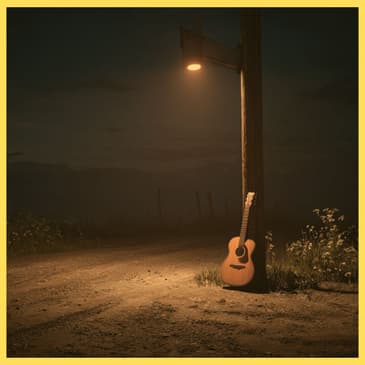
It's a smoky and crowded juke joint in the Mississippi Delta in the nineteen thirties, a place for people to socialize, drink, dance, and listen to live music. And there we're surrounded by the sounds of blues legends like Willie brown Son, House, Charlie Penney, but among the crowd for someone else, a young and excited young man desperate to join the ranks of these musicians. One of the older musicians goes out for some air during a break, and Johnson goes for one of the guitars and he plays, or at least tries to play. Sun Howe's described it as such another racket you never heard. It was so bad that the crowd got upset, asking for the boy to stop, so Son grabs a guitar away from him, and the boy gets laughed off the stage. But this boy, this young man, his name was Robert Johnson. He was so embarrassed and angry at himself that he leaves town completely, disappearing from the music scene, the juke joints he loved so much, and instead he went back to the place where he was born, to Hazelhurst, Mississippi, several months later, he returned to the Mississippi Delta, and he goes back to one of these places, these juke joints, and he asks to take the stage one more time. The older musicians, of course, expected another racket, random sounds coming from a guitar, but still they let him play. And what happened next shocked everyone in the room. Robert's hands fly across the strings, complex style, playing the rhythm and the lead guitar at the same time, voices coming from him. Three people in one or so it seemed no one can believe. Sun later said that once Robert finished playing, everyone's mouths were standing open. How does a young man go from annoying everybody at the place to suddenly becoming a professional in a matter of months. Well. One of music's most iconic myths is that Robert Johnson, the young man that took the stage, took his guitar down to a lonely dirt cross roads at midnight at the intersection of Highway sixty one and forty nine in Clarksdale. There he met a dark figure that took his guitar, tuned it, played a piece, and then handed it back to him, granting him supernatural mastery over the instrument. This legend said that Robert Johnson had sold his soul to the devil. You may have heard about artists or performers nowadays gaining fame or money through satanic rituals, and though how true they are is up to what you're willing to believe every once in a while, but yet compelling evidence that the devil can in fact grant wishes. In this episode, I'm going to tell you about the tragic story of Robert Johnson and how to be ready if you ever meet the devil at the Crossroads. My name is Edwin, and here is a horror story. In a way, our story really begins at the origins of the crossroads. This place sort of like e liminal space or the back rooms that legend that we hear about on the internet. This area, a location between worlds where two realms meet roads opens itself up to the supernatural. Now, if you go back to this specific music mythology, we get to West and Central Africa, where the Yoruba people have traditions where they mentioned the crossroads part of the domain of a god and a messenger, though he's sort of a trickster named Eshu, who interprets human desires. Here's how the story goes. Eshu was a young boy who loved sharing stories, and one day he found a coconut shell at a crossroads. But this was not a normal coconut shell. This thing had terrifying eyes shining insight of it. So he ran to his parents and told him the story. But they didn't believe him, and soon after the boy died and terrible floods and fires struck the world. They should have believed him. In order to get his spirit back, local priests put up a smooth stone at the crossroads and anointed it with precious oils. Following the scent essue spirit king to live in that stone and peace was restored. Now they say that issue isn't an evil spirit, but a challenger that tests human wisdom and ego. They say that he appears wearing a cap that is black on one side and red on the other, so that humans can argue over it. I found the story really interesting because it was able to travel along with enslaved Africans to the Americas and eventually evolving into other figures like Papa Legba in the Voodoo tradition. Another messenger to the spirit world. Now, I'm not sure if you've heard about this, but the Congo cosmogram from Central Africa, which is across symbolizing the rising and setting sun. The human life cycle sort of chose a crossroads as an ultimate intersection for communication between the living and the ancestors. But here's where the stories merge. When European folklore and these African traditions ended up in the same place, we ended up with this idea of the crossroads, two roads that meet in the middle of nowhere. That's usually how I imagine them being in places of dread. The reason was that in medieval Great Britain, crossroads were burial sites traditionally for criminals and suicides, chosen specifically so that the intersecting roads would confuse or restless spirits. In Western folk mythology, it was also the chosen location to summon a demon to make a deal. That's what became famous by the Foss legend. Now, by the way, this legend is the story of a person that trades their immortal soul to the devil in exchange for worldly desires like fame, power, skills, knowledge, or money. This comes from a text titled Historia von de Johann Fauston. But if you go even further back, you can find a similar story from the sixth century in a legend from Turkey. Now, the idea of musicians getting impossible talents from dark forces, it was already well established in Europe. I guess it's pretty well established here too. But anyway, there was this one violinist, Nicolo Paganini in the nineteenth century who was able to play at incredible speed and play entire concerts for memory. The rumor had it that he had struck a demonic deal because of how creepy and slightly devilish he looked. Also, he was really good, like abnormally good, and then though not quite a deal. The composer Jusepeitzartini claimed that the Devil's trill, one of his famous sonatas, was a shadow of a quote ferocious performance he had heard the devil play in a vivid dream that. Did any of you watch Sinners the movie? I talked about it on my socials and stuff. But it's loosely based on Robert Johnson. Actually, it's one of the characters is supposed to be kind of Robert Johnson and a lot of the American South had a mix of these traditions like the ones we see in the movie, eventually forming into the powerful folk spiritual known as who Do. Churchgoers, of course, started going against the fiddle and banjo because it was the devil's music, and any stringed instrument became linked with sin, sinners, sin get it. But back to Robert Johnson, right, here's a connection. By nineteen twenty six, vocalist and Pucket documented a story from a New Orleans conjurer that outlines the ritual about deals with the devil perfectly, and that was later pinned to Robert Johnson. Now this thing is chilly. Here are the specific instructions. Feel free to follow them if you want to. If you want to make a contract with the devil, you must trim your fingernails as close as possible. You must also take a black cat bone and your guitar to a lonely fork in the road at midnight. Are you there good, Let's keep going. You sit to play, and when you're ready, an unseen musician will approach you. He will sit right next to you and play with you in unison, and you must keep playing. Don't stop. Eventually this figure, this musician, this devil will take your guitar, trim your nails until they bleed, and then give you back the guitar. From that moment on you will be able to play anything you wish, but your eternal soul will belong to the devil in the world to come. And it was this, this rich cross of cultural narratives that blended African spirits, European demonic pacts, and the Southern susbiion of devil's music that created the ultimate folklore foundation, waiting perfectly for a musical genius to step right into the myth. So, okay, the story got pinned to Robert Johnson, our original guy that became really good at the guitar. But how now here's where the story gets a twist. There was another blues player, a bluesman as I recalled. His name was Tommy Johnson. Now Tommy was not related to Robert, and plus he was older. But he told his brother, Reverend Laddell Johnson, that he himself, Tommy Johnson, had gotten his skills through a midnight bargain sort of like a confession. And according to Laddell the priest, the Reverend Tommy said that if you want to learn to play anything, you must take your guitar to a crossroads just before midnight, wait for a big black man to walk up, take the guitar, tune it, and hand it back. Now this is pretty close without the nail trimming thing. But this was the whole other guy, not Robert Johnson. So what happened? So? Income sun House, one of the musicians that met Robert decades after Robert Johnson died in a strange and unexplained manner, which I'll tell you about it in a bit, Sunhouse told people about how he had witnessed how Robert transformed into a professional and a short amount of time they asked him how Robert had gotten so good. He told people that he must have sold his soul to the devil to learn to play like that. Now, this story took off. It was printed in the liner notes of Robert's nineteen sixty one compilation album King of the Delta Blues Singers, introducing the myth to a massive new audience, cementing forever as a fact in popular culture. But it didn't just happen by itself or through that quote alone. Robert's own music kept the story going leaning deep into the dark persona of a rebellious blues artist. He even used Hudu imagery and songs like Me and the Devil Blues and hell Hound on My Trail. As you might know, I love music and these kinds of stories also the background of a song, so I looked into it, particularly one of his songs called cross Road Blues, which was said to depict a satanic bargain. But after reading the analysis of it, looking at the lyrics, listening to the whole thing, I think it's more about a man falling to his knees and begging for God to save him. Other historians believe that the song's intense lyrics are not fear of the devil, but the very real and existential terror of a young black man finding himself alone and stranded at a rural intersection after dark and the Jim Crow South completely at the mercy of passing motorists money. But still, if you listen to the song today, you can see the connection of Tommy Johnson's original tale, the exaggerated quote from Son how and Robert Johnson's darkly poetic lyrics A man that became one with a myth? But why are these recordings so otherworldly? Though? That's what I'm about to tell you up next. Now, I'm not too familiar with what the blues sounded back then, but even when you set aside the folklore and the lyrics, there's something about Robert Johnson's recordings that sound a little yerie. I mean no offense of Roberts or anything. I'm sure that he was going for something just like that in part at least. But from an article by Julia Simon from the University of California, Davis analyzed this the same thing that I thought of in a paper and found that his music had spectral timber, a complex, eerie constellation of sounds and acoustic effects that feel a little weird, unfamiliar, unnatural, and it's difficult to trace back to a single human source. It also brought along this other thing, but they called the two guitars illusion, where it sounds like there is more than one person playing the guitar, like when Rolling Stones's guitarist Keith Richards first heard Robert's records, he was like, who's the other guy playing with him? He eventually learned that Robert was playing entirely by himself. Doesn't it make you wonder if he really was the only one playing. Robert, though, was able to get this by playing an independent rhythm and lead at the same time. There is this one song Preaching Blues, where he keeps this rapid fire thumping bass rhythm while playing slide melodies at the same time or plucking high register half chords. This makes the illusion that there are two guitars playing one with a walking bass line. I'm completely uninterrupted by his solos. It's bizarre now. Another one of his tricks were that he played a cheap colamazoo in stella guitars with a different kind of bracing the kind he combined with instruments, and it made this ringing bell like quality that was a natural. They also say that he recorded while facing the corner of the room to make the sound a little more echoe. Now to me, it makes it sound really creepy. But man, Robert was super talented, and he also had this huge range in his voice, pinched nasal sounds, powerful chest voices, and this eerie high falsetto oohoo sound. I'm intense humming that vibrated the track. Was also there, this deep humming it muttered phrases it was. It's impressive to listen to it. I recommend you just at least go check it out, just so you know what I'm talking about. But there was this one song, the one called They Are Red Hot, where it sounds like three completely different characters singing and speaking in a single line. I'm sure if you check it out you'll also wonder if someone else is singing along with him. It really messed with people's minds back then. For a single man in a makeshift studio to make such a sound impossible acoustically, but that's what gave him that ghostly presence, again, solidifying the idea that he had struck a deal with the devil. But the Robert Johnson story wasn't that of the devil. In fact, it's rooted in sadness and tragedy. He was also practicing NonStop and also involves his incredible natural gift. Now do you remember when she was laughed off the stage? How he left town, Well it was because his young wife, Virginia Travis, and their unborn baby had died in childbirth. It wasn't out making a midnight pack for the devil. It was morning, and even worse Virginia's family was blaming the tragedy on Robert, saying that it was the punishment for playing devil's music. Robert was devastated, but still driven, so he threw himself one hundred percent into his craft. He moved in with his guitar teacher, Ike Zimmerman and sort of joined his family by being there. Had to find absolute peace and quiet, maybe because he had gotten so embarrassed at the stage and wanting no one to hear his mistakes. They would practice late at night in a nearby country cemetery, sitting among the tombstones for hours. They practiced in the dark, among the dead. But it was that time that allowed Robert to improve his skills. Now. Aside from that, Robert had a photographic memory where he could listen to a song just once on the radio or on a phonograph, and he learned how to play it perfectly. He couldn't even sit with a group of people be in a deep conversation with them, and could remember and play back a song that was playing in the background. Sadly, though, right when his career was solidifying with his recordings in nineteen thirty six, in nineteen thirty seven, his life was cut short. In August of nineteen thirty eight, Robert was playing at a juke joint in three Forks near Greenwood, Mississippi. Legend has it that he was flirting with a married woman and her jealous husband offered Robert a bottle of whiskey laced with passegreen, which was a backwoods poison derived from mothballs. Robert survived the initial poisoning, but he was taken to his shotgun house on a plantation north of Greenwood, where he suffered for several days before Diane August sixteenth, nineteen thirty eight. He was only twenty seven years old. Since they didn't do a formal autopsy on him, the exact cause of his death is unconfirmed, but still he became one of the first members of the infamous twenty seventh Club, a tragic fraternity of legendary musicians all died at that exact age. Still, even in death, Robert Johnson still is surrounded by mystery. His death certificate said that he was buried at Zion Church, but didn't say which one. Now there are three different churches in Mississippi that say that Robert is buried there at an unmarked grave. There's a memorial marker at Mountain Zion Missionary Baptist Church, another one marked by a rock band at Payne Chapel, and a gravestone at Little Zion Missionary Baptist Church on Money Road. Or could he now hear me out here with his other dimensions quite literally be resting in three different places, just like his three different voices. Still, the grave at Little Zion, according to witnesses at the burial, is the most reliable resting place for the Blues legend. It was difficult to understand how a single individual was able to sit with the microphone and make such a complex variety of sounds, which is why we turned to the supernatural. Still, though, beyond the legends of midnight deals and dark figures at the Crossroads, the true legacy of Robert Johnson is rooted and just how talented and dedicated he was. There is no doubt now that he achieved immortality in whichever way you want to believe that he did so, through giving his heart and soul entirely to the Blues, or by meeting with a dark figure at the crossroads, giving him the supernatural ability to take control of those who listened to him. I remember when I watched Sinners at the movies, I was a little disappointed, honestly, in the lack of death in the story. There was just so much more that the movie could have made us experience, considering how deeply rooted these traditions were in the South. But it did manage to do one thing. It made us look into the things that showed on film and made us realize just how accurate they were. Now, this is not a biopick or anything about Robert Johnson. If anything, Robert would be Sammy in the film, with the other brothers also taking a part of Robert Johnson's character. Other differences are in the vampires instead of the devil, and it has another type of magical realism, bringing in how other music was born. An actual adaptation of this would be the movie called Crossroads from nineteen eighty six, where they dramatized a fashion bargain. The other movie called Oh Brother, where Art Thou a character named Tommy Johnson is the one who sells his soul to the devil, clarifying the truth of the myth that it wasn't Robert. I don't know. I think someone being so good that people can't believe it, so they explain away your talent as given to you by the devil. It's sort of a compliment, don't you think anyway? Thank you all for coming back to Horror Story to listen to more. We've got some great ideas from you last time in the comments and emails, like the story of Shepherdstown and West Virginia, a haunted town rumored to have a ton of supernatural stories, so thank you for that, and also a focal or legend about the Yakshi's and Kerala haunting women's spirits. Now we'll hear more about those and upcoming episodes. Thanks. By the way, this episode was written and produced by me Edwin Kovarubias. But this podcast wouldn't be anywhere without help from our Scary FM team and our Scary Plus members that support my storytelling and let me put out more shows like Paranormal Club. We want to support the show head on over to scaryplus dot com. But hey, even a share of review five stars it would do wonders for the podcast too. Some of you have asked about more Latin American stories, and I'm happy to announce that I'll be making a YouTube channel about just that. It's also gonna come out in podcasts form, but in a format I haven't done before. I'm gonna keep you posted on what this is all about, so follow me for updates on Instagram and Facebook. My username is Edwin Cove. That's E d w I N COO v all one work and it's also linked in the description of this episode. Now, it might be a low res kind of thing at first, but we'll get up to speed and keep improving on it. I'm YouTube video, so things are a little scary anyway. If you tap follow on this podcast, I'll be back soon with another story. Thank you very much for listening. Keep it scary everyone soon