
You can find Edwin social media as @edwincov
Have an idea you want to send? Send me an email or DM! hello@horrorstory.com
Voicemails: fanlist.com/scary
You can get these ad-free through ScaryPlus.com free for 14 days, then 4.99 per month. Cancel anytime.
Get in touch on HorrorStory.com
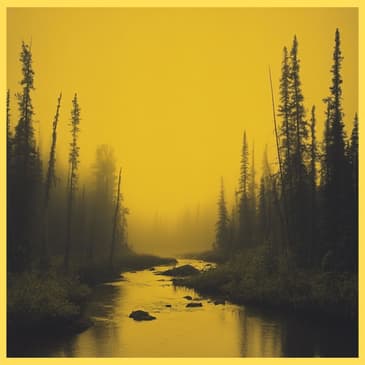
In the far reaches of Canada's northwest territories lies a region that few have dared to explore. The Nahani Valley is a place of staggering natural beauty, carved by the ancient waters of the South and Hani River, surrounded by towering peaks of thick forests. But this land, as breath taking as it is, holds a terrifying reputation. For more than a century, it has been known by another name, the Valley of headless Men. Long before European explorers arrived, the indigenous Dene people spoke of this valley in hushed voices. Their oral histories warned of danger beyond the mountains. They told stories of the Naha, a mysterious and feared tribe of warriors who lived in the highlands. The Naha were said to descend into nearby settlements to raid and kill, and then vanish without a trace. Eventually, even the Naha themselves disappeared, and to the Dene, the valley became taboo, cursed off limits. My name is Edwin, and here's a horror story. Some people didn't care about the warnings, though. In the early nineteen hundreds, tales of gold buried deep within the Nahani began to spread. Driven by greed, prospectors flooded into the region. Among them were Frank and Willie MacLeod, experienced trappers who set out in nineteen o eight in search of the legendary mother Load. The brothers navigated through rigorous terrain and encountered various indigenous groups during their expedition, including the Cassiar, who they learned were carrying gold nuggets that were not valued for their own purposes, but were in high demand among white sellers. But these guys, Frank and Willie were never seen alive again. In February of nineteen o nine, Charlie MacLeod, which was a third brother, informed the authorities about the unexplained deaths of Frank and Willie. This prompted investigations into what had happened, raising essons about whether their deaths were simply a result of superstition or if there were deeper mysteries involved. After not hearing from Willie and Frank for years, Charlie MacLeod took it upon himself to lead an expedition in search of them. Gathering a small group of companions, he aimed to retrace the row taken by his brothers on the original search for gold, and during this search, Charlie discovered a camp site near the canyon, one that revealed two skeletons. They were believed to belong to his missing brothers. The remains indicated signs of a violent struggle, notably the absence of their skulls, leading to speculation about their fates. The fact that only the heads of the brothers were missing is often a sign of a trophy hunting behavior, implying a more personal motive behind their deaths, which starkly contrast with the narrative of wild animal attacks. The deaths of the McLeod brothers were only the beginning. In nineteen seven seen another searcher for gold named Martin Jorgensen, vanished. When his body was finally discovered, it too was headless. In nineteen forty five, yet another miner was found dead in the valley, once again without a head. Over the decade, similar reports continued. Some bodies were found, others were not, but the pattern remained chillingly consistent. For example, a woman became the center of attention when she mysteriously disappeared in then a Hani valley. They followed her trail into the woods, where they found her clothes scattered at irregular intervals, suggesting a frantic escape. Now, despite their swift action to find her, they were unable to catch up after nine full days of searching. It was peculiar that a woman unfamiliar with the region managed to evade capture by seasoned trackers, and the search was ultimately abandoned due to complete lack of further signs of her whereabouts. Then, in nineteen thirty six, two men disappeared after their cabin burned down. The question of whether they vanished before the fire or escaped only to get lost afterwards remains unanswered. In June of two thousand and five, Fred Hardesty and David Horay disappeared under mysterious circumstances, all while in a cabin near the Nahani National Park in Canada. Despite extensive search efforts by law enforcement, including the Royal Canadian Mounted Police, no immediate leads were discovered concerning their whereabouts. Now, wildlife attacks could explain some of the deaths. Maybe the terrain is harsh and the winters are unforgiving, but the precision of the decapitations, the lack of signs of struggle and The frequent presence of undisturbed personal belongings around the bodies raised questions these weren't ordinary wilderness deaths, as the Canadian government designated the region or national park. The stories didn't stop. Local legends speak of spirits that guard the land, angry that outsiders have come seeking the riches. Others say there's something ancient in the mountains, something that has never been named. To this day, the Nahani Valley remains largely uninhabited. Beautiful, yes, but burdened by a reputation that makes even seasoned explorers think twice. The question that has haunted the valley for over a century still remains, what really happened to the men who entered and never returned? The Nahani Valley's mystery has endured not just because of its remoteness, but because of the chilling regularity of the deaths and the silence that surrounds them. People don't just vanish in the Nahani Valley. They disappear without a trace and are found in ways defy easy explanation. Now many theories have tried to explain the headless deaths. The most conventional ones lean to nature itself. Like I mentioned earlier, there are wolves, grizzlies, mountain lions, and they all just roam freely. Also, hypothermia can confuse a person's mind, causing them to undress in freezing temperatures to become disoriented and vulnerable. But could animals have removed the heads post mortem. It's possible, but even trained biologists admit that it's rare for scavengers to remove a skull so cleanly and consistently. Then there's a human angle. Murder is never off the table. In a gold rush in the early twentieth century, the area was pretty much lawless. Greed made men ruthless. Perhaps some of these men were killed by rivals, their bodies dumped in the wilderness, heads removed to conceal their identity or as a symbol of conquest. But here's where the trouble is, because if that were the case, why were valuable supplies often left behind? Why were weapons untouched? And why was there no sign of struggle in so many cases? The Denin legends offer another explanation to them. The valley is spiritually charged, a place where the living don't belong. The disappearance of the Naha tribe is in itself a mystery. Some say they were wiped out by supernatural forces, and others claim they simply retreated deeper into the mountains and still live there, feral, unseen, and dangerous. And then there are those who look beyond both science and folklore. Some theorists claim that a honey valley sits a top of a type of vortex, a window into another dimension when that distorts time, magnetism, and even reality. Tales of compasses spinning, equipment failing, and explorers feeling watched are common among those who have dared to enter. Could the heathless Men be victims of something we don't yet to understand, something that has never wanted to be found? But for every theory, there are more questions. Was it murdered in a discovered cryptid, a curse, or perhaps something even more ancient and unknowable. The further one digs into the history of the Nahani, the more it begins to feel like the land itself is hiding something and punishing those who get too close. Now, the story of the Nahani National Park isn't complete without an understanding of the rich cultural and historical backdrop, one that was provided by the indigenous peoples of the area. The term Nahani is derived from an ancient tribal name associated with the Dene people, known as in some circles as the Naha. These Dene groups inhabited the river valleys, intertwining their identity with the history of the land. Different communities have used various names for themselves, influenced by both the heritage and interactions with the neighboring groups. A significant folk tale among the Dane is the Long Winter, which suggests a time when the earth was enveloped in perpetual winter. This legend serves as a cultural touchstone, linking the tribe's passed to the current narrative and hence at the ancient environmental changes such as potential comet impact leading to extreme cold. Fear of the valley has become generational. Stories pass from one campfire to another, always ending in a warning, don't go too deep, don't stray from your path, and if you do go missing, no one will come looking for you. Because in the Valley of Headless Men, not everyone comes out with the story intact. Some don't come out at all. Online searches for the word Naha often yield references to a now extinct tribe characterized in historical accounts as barbaric and violent. The Najas disappearance is a focal point for narratives, with a prominent accounts from a native grand chief claiming that the Naja had settled in the mountains and were known as raiders who would descend into the lowlands during the summer. This would lead to a war by the other chiefs to eradicate their threat, and despite a lack of clarity regarding the exact timeline of the Nahas disappearance, some theories propose that the apparent vanishing may link the origins of present day Navajo and Apache populations, with both groups possessing migration stories and linguistic ties to the Dani language family. This note was brought up by the YouTube channel The Lore Lodge, which I found during my research. And then there are the Naka, the monsters of the valley. Supposedly, the Naka, often confused with the Naha due to the similarity in the names, were depicted variously as human like beings or terrifying monsters living in the crags of the Nahani River Valley. Fear and myth are central to the narrative surrounding these entities, with one of the communities experiencing immense dread of the unseen foe. Accounts from the late nineteenth and early twentieth centuries described the naka as primarily male figures who would raid communities, creating a pervasive sense of terror and prompting myths about the elusive nature. It's worthy to note here that missionaries and ethnographers from various backgrounds observed and recorded these fears. Today, the Nahani Valley is a part of a protected National Park reserve, and while it draws a few adventurous hikers, it remains mostly untouched. Helicopter access is the most common way in, and there are no roads, and many who have entered speak not just of isolation, but of something deeper, a presence await. Some describe the air as thick, unnaturally still, as if the forest itself is holding its breath. Modern accounts echo the old fears. Explorers have reported failing electronics, compasses that spin, cameras that simply won't function. Others have shared feelings of being watched, followed, and even though they were alone, dogs sometimes refuse to go forward. Nighttime brings sounds that shouldn't exist, like footsteps, flutes, and whispers. Some have returned with odd bruises, with no memory of how they got them. One explorer, a former park ranger, recalled seeing what he described as a flickering show, too tall, too fast, darting between the trees just before sunset. Another hiker claimed to have encountered a perfectly preserved camp site, complete with food and gear, but no people. When he returned with help two days later, the site was gone, no trace, not even footprints. Researchers, thrill seekers, and even documentary crews have ventured into the valley with cutting edge equipment, only to retreat with little to show for it. The landscape is too vast and the terrain too brutal. Whatever secrets the Nahani holds, it keeps them well. Reports exist of teams splitting up, only to find themselves circling back to their original camp from different directions, as if the terrain had shifted behind them. Some locals say that the place is alive, that the valley itself chooses who returns, that those who come in search of riches or fame rarely leave, but those who enter with respect might be spared. A few indigenous guides speak of offerings, leaving tobacco or food at specific point on the trail, this to appease the spirit said to guard the region. The Canadian government has largely stayed quiet about the legends, offering no official explanation for the heathless deaths. Some find that silence suspicious, Others say it simply because there's nothing to explain. But silence is its own answer. Sometimes a lack of investigation doesn't ease aspicion, it deepens it, And so the Nahni remains beautiful, dangerous, and unsolved. The stories haven't stopped, they've just gotten quieter, now passed in whispers, repeated in camphire, tales shared among those who have stood in that valley and felt the invisible eyes. But perhaps the most unsettling truth is that we may never know what happened to those men. Perhaps we were never meant to. Then Hani does not give back what it takes, and maybe that's the point. Despite more than a century of stories, speculation, and whispered warnings, then a Hani Valley remains a mystery, avoid carved into the Canadian wilderness, where answers vanish as quickly as those who seek them. In recent decades, the mystery of the headless Men had become more than just a Canadian legend. It's been referenced in paranormal documentaries, French research circles, and conspiracy forums around the world, and yet no mainstream investigation has ever offered a solid, satisfying conclusion. The deaths are either quietly written off as exposure or animal predation, or more commonly, simply left open unexplained. Perhaps it's because there's no single answer, then, Nahnei seems to resist categorization. It's not just haunted or cursed or dangerous. It's all of these things and sometimes something else too, something more primal to me. It seems like the valley is not merely just a place, but more like a force. And what makes it, in a honey legend so strong is a pattern the recurring imagery man venturing into the valley with dreams of gold and vanishing or worse, found decapitated, stripped of their identity, as if to erase not just a body but a story, a violent silence. There are no known indigenous burial sites in the deepest part of the valley, no known war zones, no obvious territorial markers, and yet generations of the Dene people have avoided it, warning outsiders to stay away. To them, the land is aware, and disrespect is yes, not just unwise, it can be fatal. Some researchers have speculated that the mystery might stem from a lost history, forgotten conflicts, or buried truths about who the Naha really were. Could the so called head hunters have left behind guardians, traps, or curses. Could a surviving group have maintained a hidden existence all these years, living deep within the canyon walls, emerging only when disturbed. Others still suggest that the valley is a natural phenomenon. We simply don't understand a geological anomaly that affects magnetic fields, perception, and time. Places like the Bermuda Triangle, the Alaska Triangle, the Siberia's Valley of Death, all these share similar stories, vanishing people, malfunctioning gear, inexplicable violence. Maybe in Nahani is part of that same global pattern, a hidden network of places where reality he bends. And yet the gold itself, always part of the story, remains unfound and said to be buried somewhere along the flats or the south in the Hani rivers. A lost mother load. But what if it's just the lure, a baited hook, that the valley uses to draw people in. As long as greed exists, someone will try again. Some already have. There are rumors of modern adventurers who go missing and are never recorded, names that vanish from trip plans, even a few seasoned survivalists whose final GPS pings place them deep in the valley. Too deep, and for those who return, there is often a silence, a haunted look. Many don't want to talk about what they saw, and a few have changed careers, like this one man, an ex geologist, who rode in a private blog entry which was later taken away from the Internet. What I saw and then Ahni made me question what I thought I understood about the earth and about myself. It might have been just reflective thought, or maybe something else. But the Nahani Valley doesn't need to explain itself. That's part of its power. It sits in the far north, remote, unyielding, and content to wait. It doesn't care about your technology, your courage, or your disbelief. It has outlasted legends, prospectors, and even governments. Perhaps one day the mystery will be solved, Perhaps someone will find hard evidence like fossils, bones, or artifacts, something that rewrites the history of the valley. Or maybe that silence, that emptiness, is the answer. Maybe the mystery is the warning, because in the Valley of heathless Men, the land remembers everything and it forgets no one. So what do we do with the place like the Nahani Valley, a place that has swallowed history, people and reason for folklore feels more like fact the longer you sit with it, and facts fade into shadows the closer you try to get. The Valley of headless Men defies closure. It pushes back against explanation, and even now, with all the tools of science, satellite imaging, forensic analysis, and digital mapping, we are no closer to understanding it than we were a century ago. Perhaps understanding was never the point. Maybe survival is what remains. Then, is story passed down through generations, retold in whispers and warnings, the kind of stories that once belong to only indigenous elders and warry bushmen, and now live on the internet, in podcasts and in late night conversations around flickering campfires. Some say the valley is the last true wald place that in a world tamed by roads and cell towers than a honey Valley remains one of the few places untouched, unbent by human will, and that maybe, just maybe, there are still things in the world we are not meant to name, not meant to follow, and not meant to conquer. If that's true, then the decapitations, the disappearances, and the eerie silences, they're not just tragedies. They are signs, messages from a living land that has drawn a line and said no further. To some that's terrifying, To others it's sacred. But even the sacred has its price. In the end, the Valley of Headless Men leaves us with more questions than answers. What happened to Frank and Willie MacLeod, to Martin Jorgensen, to the others whose names never made the headlines. Did they find gold, did they find something else? Or did the valley simply take them as it always has, quietly and completely. We may never know, and that's the part that lingers, because in this world some places are not men to be solved. Some places are meant to be feared in Some places, like the Nahani Valley, are meant to be remembered, even when they do everything they can to make you become a dark memory. This episode was produced by me Edwin Kovarrubias based on our recommendations for places similar to the Superstition Mountains. You would be surprised to find out how many of these places exist in our world. Anyway, you can support our show by sharing it with someone who is into these topics and by dropping some stars from me in this app. Thank you very much for listening. Keep it scary everyone, See soon.