
You can find Edwin social media as @edwincov
Have an idea you want to send? Send me an email or DM! hello@horrorstory.com
Voicemails: fanlist.com/scary
You can get these ad-free through ScaryPlus.com free for 14 days, then 4.99 per month. Cancel anytime.
Get in touch on HorrorStory.com
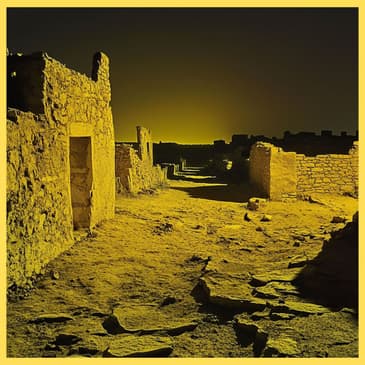
There are places in this world that seem to hold on to their secrets more than others, Places where time feels frozen, where the air is heavy with questions that no one can answer. One such place lies under the relentless sun of the tar desert in Rajasthan, India, a barren village of crumbling walls and empty streets. No smoke rises from the chimneys, and no voices fill its narrow paths. It's just silence and a lingering presence that no one dares to disturb. For more than two centuries, the ruins of Kultara have stood as a quiet monument to a mystery that has never been solved. An entire village, once thriving with life, vanished overnight, no signs of struggle, no traces of violence, no written explanations left behind, only ruins and a legend that remains. The locals will tell you not to stay thereafter dark. Tell you of whispers carried by the desert wind, the footsteps that follow you when no one is there, of shadows that seem to move just beyond your vision. They believe this place is cursed, that whatever forced the villagers out has never truly left but what really happened there? Was it a brutal ruler's cruelty that drove the villagers away, a desperate escape from unbearable oppression? Or was there something else, something deeper, something darker, something that cast its shadow over Kuldara. Tonight we step into the dust covered streets of this abandoned village. We follow the trail of history, of legend and the unexplained, and we search for answers in a place where none have ever been found. This is a story of Kuldara, the cursed village that disappeared. My name is Edwin, and here's a horror story. To understand Kuldara, you have to imagine the desert not as a wasteland, but as a place of quiet progress. Hundreds of years ago, long before its ruins became a backdrop for ghost stories, Kuldhara was alive. It belonged to the Polliwal Brahmins, a community of skilled farmers and traders that were known throughout the region not just for their wealth, but for their wisdom in harnessing the unforgiving desert. The Polliwalls were experts in managing water, building intricate systems of wells and channels to make life possible in the desert. Their prosperity wasn't an accident, It was earned, and it made the villages stand out like a rare gem in the desert. Kuldara was one of them, and it was more than just a village. It was a home for hundreds of families, filled with bustling markets, temples and homes built from sun big stone. Travelers passing through would have seen a thriving, close knit community. And yet, for all their success, the Pollywalls lived under a growing shadow, and that shadow had a name, Salim Singh. Salim Singh was a powerful and ruthless prime minister of the Kingdom of Jaizelmer. His reputation for cruelty had already spread beyond the borders of the desert. He was infamous for imposing crushing taxes and exploring the people under his rule. But for Kultara, the threat went beyond money. According to legend, Salim Singh's eyes fell upon the village for a different reason. Entirely he desired the daughter of the village chief. Some versions of this story claimed that she was known for her extraordinary beauty. Others say it wasn't about love at all, but about power. The Prime Minister's way of reminding the Pollywalls that the prosperity could never make them untouchable. Salem Singhs delivered an ultimatum to the villagers hand over the girl or face severe consequences. The polly Walls faced an impossible decision, give in to the demands of a tyrant and betray their community, or resist and risk annihilation. They chose neither. What happened next is a point where history fades into legend. The story goes that people of Culdhara, along with the residents of eighty three neighboring villages, made a pact under the cover of darkness. They gathered their belongings, abandoned their homes, and vanished, all without leaving a single soul behind to tell the tale, and no one saw them leave. No records explain where they went. All that remained were empty streets and quiet stone walls, as if life had been drained from the village in a single night. Before the disappeared, it is said that the villagers cursed the land, vowing that no one would ever be able to live in culdha again. Centuries later, the curse still hangs in the air. No one has ever successfully resettled the village. Attempts to rebuild have been met with strange accidents, unexplainable failures, and an overwhelming sense that the land itself resists the presence of a living But as chilling as a legend is, it leaves us with deeper questions. Was this truly the work of a curse? There is a more earthly explanation buried beneath the layers of time and sand. Before we try to answer that, we have to look closer at the land, the whispers and the reports of those who claim that could Hadai is still very much alive, with things unseen. Cold hotever remains even today, frozen beneath the relentless sun. There are no footsteps, no trace of life. Centuries have passed since the villagers vanished, but the story of gold Hada is far from buried. In fact, it seems to grow darker with time. Locals from nearby villages were fuse to enter the ruins after sunset. They speak in hushed tones about the strange things and sounds that linger in could Haa. They say that as a desert night falls, the air changes, the temperature drops unnaturally, Whispers rise from the stones, and footsteps echo where no one walks. Some have described the sensation of being watched by unseen eyes, as. Though the village itself is. Alive, observing those who dare to trespass. But what fuels these fears? Over the years, explorers, historians, and thrill seekers have come to Kuldhara hoping to find answers. Among them are paranormal investigators who claim to have captured evidence of something unexplainable, recordings filled with faint voices, flickering images of shadowy figures moving between the ruins, sudden and inexplicable equipment failures, as though something, something in Guldhada resists being seen being documented. One investigator reported hearing what sounded like chanting in the dead of night, low rhythmic voices that rose from the earth itself, and when they searched the ruins, they found no one, nothing, just the same endless, emptique silence that greets every visitor. Now it's worth noting while the investigators did report hearing what sounded like chanting, they claim to have recorded strange sounds during their visit. These recordings have never been made public, so as of now we have their accounts and media report describing the experience, but no verified audio that anyone outside the team has been able to review. Others tell of mysterious footprints that appear in the dust, too small for an adult, leading from nowhere to nowhere, vanishing as abruptly as they appeared. Even those who consider themselves skeptics admit that there is something unnerving about Kuldhara. They speak of an overwhelming sense of unease that settles in their bones the longer they stay. Some describe sudden headaches, nausea, and the tightness in the chest, as though the village itself is pressing against them, urging them to leave, and most do. Few dare to spend an entire night within the village's crumbling walls. Those who have attempted to sleep say it's impossible. They describe vivid nightmares, a suffocating feeling of dread, and the persistent sense that they are not alone. Perhaps the most chilling element of all is the way called hot To refuses to come back to life. Over the years, there have been attempts to repopulate the village, projects to restore the site, to build anew atop the ruins, and yet every effort has been quietly abandoned. Some say it's due to structural instability, others hint at financial troubles, but many whisper a different reason. Altogether, the curse of kuld Haa does not welcome the living. For the people of the surrounding region, the curse is not just a story passed down through generations. It's a living truth. It is woven into their daily lives, a quiet reminder of what happens when certain places are disturbed. And yet the question remains, is kuld Haara truly cursed? Or are the story simply echoes of fear passed down and magnified across centuries. To find the answers, we need to look deeper, still, beneath the legends and beyond the fear, into archaeological record and the whispers of history. What clues did the villagers leave behind? And why does this place, abandoned for centuries, still feel so alive with mystery? And that's where we'll go next. For all the ghost stories, for all the whispers in the dark, there's still one thing people want to know, mostly why why did they leave? Why overnight why so completely, like they were swallowed by the desert. You see, this is where things get interesting if you take away the legends for a moment. Historians and archaeologists have tried to piece together a more grounded explanation. Some believe the story of the evil ruler Salim Singh might actually be rooted in truth, but maybe not exactly. The way it was told. You see, back then, heavy taxes were a fact of life. Cruelty from leaders wasn't rare, but for a whole group of villagers eighty four of them, according to the old stories, to just pack up and go suggest something bigger, maybe something more than just one man's greed. Some researchers think that the answer might lie in the land itself. The desert is harsh and it doesn't forgive mistakes. Water, which once made the polywall so successful, may have begun to disappear. Maybe the brilliant water systems dried up, Maybe the wells turned to dust, and without water, a village like Kuldhara wouldn't just struggle, it would die. And then there's a theory of earthquakes. This part of Rajasthan is known to have occasional seismic activity, and not the kind that flattened cities, but enough to shake things up literally. Some archaeologists have pointed to subtle cracks in the ruins that could hint that old tremors scaring people into fleeing. And of course there's migration, quiet, slow moving but unstoppable communities sometimes move for trade, better opportunities, or just a chance at survival. Maybe the Polywalls saw trouble coming from more than one direction, natural disasters, political pressure, or worsening trade routes. They just simply decided to leave all together, all at once. But even with these reasonable theories, there's still something about could Hata that refuses to make sense. If it really was just about survival, why are there no records? Why not a single mention of where they went or why they left? The poly Walls were educated, respected, They weren't the kind of people to vanish without an explanation, and yet that's exactly what they did. And it's this gap between logic and legend where the story really grips you. It's what keeps people awake at night wondering. It's what keeps ghost hunters hauling their gear through the sand, chasing faint voices on old tape recorders, because even if the rational theories explain how they left, they still don't explain the chilling feeling people get when they step into Coldhara today. And sometimes the scariest thing of all isn't the ghost or the curses or the flickering shadows. In the night. It's the empty spaces, the unanswered questions, the stories that never got to have an ending. Ask anyone who lives near Kultata, and they'll tell you this isn't just a story from the past. It's still alive in its own way. It's something they've grown up with, something they respect and fear. The villagers nearby will tell you flat out you don't stay in Kultada after sunset. They'll say it's just not worth the risk, no matter how brave you think you are, no matter how much you convince yourself, it's just old ruins. One's night falls, the village changes. Some say they've heard voices, low and urgent, as if people are still there, still speaking to one another in hurried whispers. Others swear that they've seen figures moving through the ruins, quick shapes that vanished the moment you try to focus on them. One story passed down from the elders tells of a traveler who thought that these tales were nothing but superstition. He chose to camp inside kuld Haata for the night, determined to prove everyone wrong. But by morning he was gone. His belongings are still there, neatly arranged by the old temple wall, but there was no sign of him. People searched the surrounding desert, but no trace was ever found. Some say he laughed on his own, Others think he became a part of the village's unfinished story. There are tales of merchants passing through at dusk, hearing the sounds of a market, coins, clinking voices, bargaining, only to find nothing but empty streets when they turned the corner, as if the echoes of gould Haa's final days still replay themselves over and over, trapped in time and then. There's a feeling people talk about. They describe it like a weight pressing down on their chest, heavy and cold, like being watched by something that's not exactly human but not entirely gone either, not malevolence but not welcoming, just aware of you. Even government teams and restoration workers have shared strange experiences. Some have reported tools going missing, only to be found hours later in places no one had been. Others speak of sudden, sharp drops and temperature even under the relentless desert sun. The thing is, these stories don't sound like wild exaggerations when you hear them from the people who live there. There's a certain quiet conviction in their voices, like they're not trying to convince you. They already know it's true, and whether you believe it or not, that's your choice. But for them, the curse of Cooldhara isn't just a for tourists. It's a part of their reality. It's the way they avoid looking at the village after dark. It's the way the children are taught the story early on, not as entertainment, but as a warning. From what I found, The story goes like this. The villagers of Guldhada made their final decision to leave. They knew that they couldn't fight the power of the ruler who was closing in on them. They knew they couldn't stay, so before they left, they did something that would outlast them. They curse the land. The elders of the village are said to have gathered beneath the old temple under the pale light of the desert moon, and performed a final ritual, not out of rage, but out of sorrow, a desperate act to protect their people. Even as they vanished into the night, the curse they placed was clear. No one would ever thrive on this land again. Anyone who tried to claim it, to build the new life over the bones of the old, would suffer misfortune, illness, accidents, unexplained disasters, and even death. According to those who lived nearby, the curs has held strong. Like I said, there have been attempts over the years to settle caled Hata again. A few brave or perhaps foolish groups try to build new homes inside the ruins, and every time things went wrong. Livestock died without a cause, crops withered even when rains came, tools broke mysteriously or simply disappeared overnight, and worse, people got sick with no explanation from doctors or healers. One of the more chilling stories is about a group of workers who were sent to clear part of the village for restoration. According to local accounts, the crew reported hearing footsteps around their campsite late at night. At first they thought it was just desert animals, but soon the sounds grew closer, heavier, as if a crowd was gathering. The next morning, the men found strange marks in the sand, not animal prints, but human footsteps circling their camp, dozens of them. They left that same day, and men never came back. There's an unspoken rule about Kuldara. You can visit during the day, but you don't linger at night, and you definitely did not disturb the land. Even tourists, at first swept off by curiosity, tend to feel it. They arrived thinking of dusty ruins and Instagram photos, but once they walked through the silent streets, past the hollow doorways, and to the temple where the curse was cast, something changes. The weight of the place settles on their shoulders, and many leave earlier than planned. Skeptics will say it's just the power of suggestion, that a well told story can make your skin crawl all by itself, but locals will look at you straight in the eye and say, no, it's real. Maybe that's why Kuldhara feels so different from other abandoned places. Most ruins feel empty, Kuldhara does not. For years, Kudhara was left alone. It stayed tucked away in the desert, its story carried only by word of mouth. But eventually curiosity did what it always does, It pulled people back in. In the early two thousands, as interest in dark tourism and paranormal investigation grew, Kuldhara caught the attention of researchers, thrill seekers, and yes, ghost hunters. People wanted to see for themselves if the stories were true, if the curse of Guldhara was real or just another dusty legend, and what they found only deepened the mystery. One of the first modern investigations came from a local paranormal society based in Rajasthan. They spent several nights inside the village, armed with thermal cameras, EMF detectors, and audio recorders. According to their report, they captured unexplained voices but sounded like whispers and a low chanting, even though their team was the only one in the area. Their equipment also picked up sharp temperature drops, sudden enough to be considered abnormal for the desert, where nighttime cooling is steady. But not so extreme in specific spots. Rejastan Paranormal Society has publicly shared summaries of their findings, which are cited in several local news features and travel articles. Then there's the Indian Paranormal Society, led by Guadafatiwadi, who is probably one of the most famous names in India's paranormal investigation scene. His team also conducted a series of nighttime investigations at Kuldhara and according to their report, they're recorded electromagnetic field spikes, sudden changes in temperature, and unexplained footprints appearing in the sand, human footprints that seem to begin and end without any trail. The Times of India cover this investigation and it has been featured in several Indian news outlets. Tourists too, have had strange experiences, and many of these are documented in travel blogs and reviews. People mentioned feeling uneasy almost immediately upon entering the village, even in broad daylight. Some describe a sharp headache, sudden nausea, and a tightness in the chest, symptoms common and reported haunting zones, although skeptics say it could be just a heat or anxiety playing tricks beyond anygnotable accounts. Archaeological teams have also studied Koltata, hoping to explain its abandonment through physical evidence. Excavations have uncovered remnants of ancient wells and dried up water systems, supporting the theory that a ronmental collapse may have played a role. And yet despite these findings, there's no definitive proof of why the villagers left so suddenly, or why neighboring villages were also abandoned at the same time. But perhaps the most intriguing part of this, despite all the attention, despite all the investigations, no one has been able to disprove the claims of strange activity in Kuldhara. Nothing has been confirmed as concrete proof of the paranormal, but nothing has been fully explained either. It's like the village itself is keeping its secrets just out of reach. Skeptics argue it's the power of suggestion that people come to Guldhara expecting to feel something strange, and so they do. But even they'll admit Gouldara feels different. Not every abandoned village draws this kind of energy, and not every ruin holds on to its legend. This tightly. There's something about this place, something that refuses is to die. Maybe it's the curse. Maybe it's the collective weight of centuries of fear, or maybe just maybe it's something we don't fully understand yet. Whatever it is, it keeps people coming back, hoping perhaps to catch a glimpse of the past, or a shadow of the villagers who vanished into the night, and who, if the stories are true, might still be there, just at a sight. So here we are, at the edge of Kuldhara. We've heard the stories of the villagers who vanished, of the curse left behind, of the footsteps in the sand that appear long after everyone has gone home. We've heard the researchers, the skeptics, the paranormal investigators, with their meters and microphones, trying to catch a whisper of the truth. And yet Old Hotever remains unsolved. Maybe that's what keeps it alive more than any other curse ever could. With Striking is how the village doesn't beg for attention. It doesn't scream its story from the rooftops. Instead, it waits, patient, silent, confident that eventually you'll come looking for answers. And when you do, it won't give them to you easily. Maybe that's the real power of places like this. It isn't about go sleeping from the shadows or curses striking you down on the spot. It's the feeling that follows you long after you've left the way. Your mind circles back to the hollow doorways, the footprints that shouldn't be there, the weight of unanswered questions pressing on your chest. Because Kuldtara isn't just a village frozen in time, it's a mirror for our own obsession with the unknown. We want to explain it, we want to put it into neat boxes history, superstition, natural disaster. But Kudara slips through all of them. No matter how many facts you gather, or how rational you try to be. There's always that quiet voice. At the back of your mind, asking what if the stories are true. What if the villagers of Gouldhata are still out there somewhere in the desert winds. What if, in some way we don't understand, the curse still watches over empty streets. What if we'll never really know? And maybe maybe that's exactly how it was meant to be, Because sometimes the places that haunt us the most are the ones that never finish telling their story. This episode of Horror Story was produced by me Edwin Kowadrubyas thanks for your suggestion for the story. Remember you can support our show by dropping some stars and if you want to try out Scary Plus, you'll get at free episodes in this very app you're using. Let me know if you have any questions about links will be in the description of this episode. Anyway, Thank you very much for listening. If you're following the show, I will tell you another story next week. Keep it scary everyone, see it soon.