
You can find Edwin social media as @edwincov
Have an idea you want to send? Send me an email or DM! hello@horrorstory.com
You can get these ad-free through ScaryPlus.com free for 14 days, then 4.99 per month. Cancel anytime.
Get in touch on HorrorStory.com
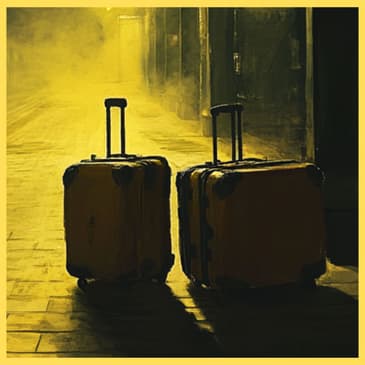
It starts with the hike, not the kind you prepare for, not where you pack carefully and check the weather. This was a spur of the moment decision, the kind people make. On a gray November morning in Norway, just to clear their heads, a father and his two daughters set out near Bergen, heading out into the foothills of the mountains that cradle the city. The path they took led them into Isdaln, a cold and quiet place known by a different name to the locals, Valley of Death. Now it's not a nickname. The valley has history. People have died there plenty of times, climbers who have slipped, hikers who disappeared, even those deaths that were ruled suicides without much explanation. There's always been a kind of silence hanging over it, not just the trees or the stone, but from the stories that people don't tell too loudly. That morning, the trail was damp and the air was thick with fog. The forest around them seemed normal enough until the smell hit them, sharp, chemical, unmistakably wrong, like something had burned there recently. And so they followed the scent a few steps off the path and that's when they saw it. Now. At first it didn't even register as a body. It looked like something had melted into the rocks. It was dark and sunken, surrounded by burnt patches of earth. But then the shape came into focus, a torso arms curled forward in a way that didn't look accidental, as if the woman had tried to protect herself, or maybe as if she had been placed there arranged. The man pulled his daughters away and contacted the police, and what followed was confusion and then silence, and then slowly a case that never really went anywhere at all. In this episode, we're going to be exploring one of the most mysterious cases in recent times, well the times around the Cold War era. This is the case of the Isdall Woman. My name is Edwin, and here's a horror story. The woman was badly burned, but something about the scene didn't line up. Her clothes had been set on fire, but the grasp beneath her was untouched, like the fire came from inside her or was carefully controlled. Her belongings were laid out next to her, Strange things like a watch, ear rings, and an umbrella, all neatly placed deliberate, no signs of a struggle, no blood, no signs of anyone else, just a woman alone and the smell of smoke hanging in the trees. Even then, before they knew anything about her, before the fake names and the coated notes and the suitcases full of secrets, the investigator said the same thing. They felt wrong, not just tragic or disturbing, but it was wrong in a deeper way, like the whole valley had gone still when she died and hadn't quite started up again. Since there is something about that place that makes the air sit heavier in your lungs. How quiet that doesn't feel peaceful, Like the trees have seen something they won't talk about. Whatever happened to the woman found there, it didn't feel like an ordinary death, and from the very beginning it was clear this wasn't going to be an ordinary investigation. The first thing the police noticed was how little there was to notice. Now. I know it sounds odd, but there were no identifying marks on the body. Her fingerprints weren't in any local data bases, no missing persons reports matched her description. Her teeth suggested expensive dental work, maybe from somewhere in eastern Europe, but that didn't narrow things down much. Her clothes were burned, but even before that, the labels had been cut up, every single one. It was like someone had gone to a lot of trouble to erase her piece by piece, where maybe she wanted to erase herself. But then there were the items found nearby. Jewelry, a bottle of liquor, a rubber boot, a burnt spoon, a few sleeping pills, not unusual on their own, but they were placed beside her with a kind of care that didn't make sense, just arranged, like someone meant to send a message no one could quite read. The police began checking the local train stations, hoping to find anything a receipt to name, a bag left behind, and that's when things got stranger. At the Brigand train station, they found two suitcases in a luggage locker. They belonged to the woman in the valley. Inside the first suitcase clothes mostly black and gray, simple and plain, no labels, a few wigs, a hair brush with a partial fingerprint that matched the woman's sunglasses, also with fingerprints, a notepad with what looked like nonsense scribbled on it, rows of letters, and numbers that didn't follow any language or obvious code. In the second suitcase, a bag of money in different currencies, several passports, and they were all under different names. None of them were real. One even had her photo, but a different name, different nationality, and none of them led to an actual person. She had in every practical sense no identity. Police tried tracing her movements from hotel guestlogs. They found out that she traveled across Norway, Denmark, Germany, and possibly farther, always under different aliases, always alone. Sometimes she claimed to be Belgian, other times she said she was French and who tell she spoke fluent German, and in another she used broken English. A maid said she noticed the woman would just sit in her room and stare out the window for long stretches of time, just watching. Everywhere she went. She paid in cash. She changed till tells often. Sometimes she asked for a room with a balcony, other times she requested to switch rooms more than once in the same night. She left behind almost nothing, and she spoke to almost no one. People started to ask questions if police couldn't answer, was she a spy, a courier, someone hiding from something or someone that would explained the aliases, disguises, the frequent travel, But it didn't explain the stillness in the valley. It didn't explain how cleanly she had disappeared from the record. And beneath it all there was another kind of question, a quieter one. Was she even from here at all? Now? I know I made that sound a little more dramatic than it should be, But there's a certain point in a mystery where facts get so rare that the mind starts to drift into stranger territory. You see, people talked, well, whispered mostly that maybe she wasn't just hiding from the world, maybe she didn't belong to it, because just hear me out, who lives like that? Who moves through cities like a ghost, using names that don't exist, with no friends, no family, no trace. And she felt real? I mean she had to be. There was a body of fire, a suitcase full of clues, and yet the more people try to find her, the less there was to hold on too. She moved like someone trying to stay one step ahead of something most of us will never see. But yeah, maybe she was just a woman with secrets. Maybe she was running away from something she had done, or maybe she was running from something impossible. Followed her through borders, through names, through rooms and passports and paper trails, until finally they caught up with her in the valley, and that's where everything stopped. As more of her story came into focus, something strange started to happen. The picture of the Isdahl woman wasn't becoming clearer, it was becoming more fractured. Every new piece of information raised more questions than an answered, and that people who had seen her those few brief witnesses all remembered her in ways that didn't quite line up. At the hotel Neptune and Bergen, where she had checked in under the name Fanella Lorch, a clerk remembered her as elegant but distant. He said she smelt strongly of garlic, like she was masking something, and that her manner of speaking was unusual, stiff, like someone carefully translating in her head. She had requested a room with a view of the street and then switched it for one facing the courtyard a few hours later. Another guest who had seen her in the lobby said that she wore a strange kind of makeup, heavy, theatrical, almost like she was trying to look older than she really was. Her eyes were alert, her posture was tense, and she held her purse like it might be taken from her at any moment. Then there was a man who claimed to have seen her buying boots in a shop days before she died. He said she looked tired, not just physically, but tired in a deeper way, as if she had been running from something for too long. She wasn't in a hurry, but she was never still, and that was the thing. No matter where she went or who she was pretending to be that day, she left behind the same feeling honeys, the sense that she wasn't really there, even when she stood right in front of you. People remember her the way you remember a dream you woke up from too fast. Some of the details are sharp, a look, a gesture, but the rest is just fog. The notebook found in her suitcase only deepened the mystery. At first, investigators thought it might be a cipher, a spice code, letters and numbers written in silanted handwriting, like coordinates or shorthand eventually they realized it was a kind of travel log, a record of cities and dates, noting where she had been. But even that didn't feel simple. The question wasn't just where she had gone, It was why she didn't stay anywhere long. Her movements weren't random, but they weren't routine either. They followed a pattern no one could quite decode. Despite theory started to stick. It made sense. Cold War Europe was full of quiet travelers in shadow games. Norway had NATO facilities, sensitive research centers, strategic ports. A woman with multiple identities and no past that was exactly the kind of person intelligence agencies used. But if she was a spy, why would her death be so public and so dramatic. Why bring the body and then leave it where hikers might find it? And if she wasn't a spy, then what was she? There were stranger ideas, the kind not found in police reports. People talked about time slips, parallel lives, others like her, travelers not from another country, but from another kind of place. One local said that she reminded him of stories his grandmother used to tell about the second people, the ones who passed through our world but never belonged to it, People who didn't age the same way, people who didn't die the same way either. It sounds like folklore, and maybe it is. But when a case breaks the rules this thoroughly, even the sensible people start thinking strange thoughts. Because here's what haunts you about the Isdall woman. It's not just as she had no past. It's that no one ever came looking for her, no family, no friends, no old neighbors calling in a tip. It was like she had lived her entire life in silence, and when that life ended, the silence just continued. You started to wonder if she was really meant to be found at all. There are stories about places where the veil between things is thinner, valleys, especially isolated places where the world doesn't quite behave. And in those places, people say things bleed through, not always for long, sometimes just long enough for a single person to pass through, confused, disoriented, unfinished, and then disappear again. What if that's what happened here. What if this woman, this quiet stranger, with all her fake names and empty hotel rooms, wasn't supposed to be here at all? What if she stabbed into our world by accident and couldn't quite hold her The police couldn't prove any of that, of course, All they had were fragments, a burnt body, a trail of aliases, a soup case of codes and wigs and silence. And the people who saw her. They remembered, yes, but their memories only deep into the mystery. She moved through lives like fog, and she didn't stay, she didn't explain, and by the time they realized how strange it all was, she was already gone. Eventually, all the pieces had to be laid out on the table. And that's how these things work. The forensics team, the corner, the detectives. They did what they were trained to do. They followed procedure, even when it felt like the case didn't belong to the rules anymore. The autopsy gave the answers, but not the kind that helped. Her case of death was listed as a combination of carbon monoxide poisoning and an overdose of sleeping pills, at least fifty of them. Most of the pills were still undigested when she died, which meant she had taken them very quickly, intentionally. And then the fire well that came later. Her body had been burned, but not completely, just enough to destroy but not to disappear. The official ruling was suicide, but even the lead investigator at the time later admitted privately that the ruling never sat right. Too many things didn't fit. The fire was too control, the placement of the items was too precise, and the woman's arms were drawn up in front of her chest, curled in an unnatural way. Some thought it was a protective gesture, as if she were shielding herself from the flames, but others saw something else in it, something ritualistic, almost symbolic. The fire itself was strange, too intense enough to char her skin and clothes, but it didn't touch the grass underneath, no signs of accelerants, no evidence of how it started. The police considered the possibility that she had set herself on fire, but no matches, no lighter, no fuel were ever found, although there were traces of gasoline. According to some reports, there were traces of soot in her lungs, so she was alive when it happened, which meant she had either chosen to die in pain or someone had made that choice for her. And there were other small things, too little details that didn't make the reports but stuck with the people involved. One investigator mentioned that the watch she was wearing had stopped that ten ten neatly, almost theatrically. Another noticed that the sleeping pills she took where the same brand as once found in her suitcase, all missing their labels. Like everything else looks like even in death, she didn't want to be known, or maybe she wanted it that way for a reason. Maybe being known was dangerous, not for her, for whoever found her. And that's the point where the theory start to bend. It's one thing to talk about spies and assassins, you see those stories at least follow a logic, even if it's dark. But when the people start talking about the fire and how it didn't spread, how the ground beneath her body was cool, the story began to take another shape. There is a line people sometimes when they stared at the unexplained for too long. I think that kind of happens with me sometimes, like they stop looking for truth and they start sensing pattern. And that's what happened here. People started thinking about symbols, about meaning, repeating the pattern here a woman with no past, a trail of names that were in hers, a coded notebook, a death that felt like a ritual, like something had to be burned away, a body left not hidden but displayed, and then silence. It began to feel less like a mystery and more like a message or a warning, or a doorway that had briefly opened and then shut again before anyone could see what was on the other side. There were whispers. A few claimed to have seen strange lights in the valley that week. Others said they heard a sound low and humming the night before her body was found. There's no evidence of that, obviously, but the people who tell those stories don't really care about evidence. They just remember the feeling that something wasn't right. There's always been something off about that stretch of land, they say, the old trail through eastladen. Some hikers say their compasses spin there. Others say their phones die. Locals avoided after dark, and not because of what happened, but because of what might still be happening. As for the woman, the investigation slowed and then stopped. With no identity, no family, and no solid proof of a crime, the case was quietly closed. There was no funeral. She was buried in a simple grave, marked only by a number and nothing else, and just like that, she was gone again, except she wasn't, not completely, because people still talk about her. Look at us now, we still search, still wonder, and even after all this time, the valley he hasn't quite let her go. Time moved on, as it always does. Cases went cold, New ones took their place, Investigators retired, witnesses aged, but the isd All woman never really faded. She stayed somehow, not in the usual way a story sticks, but like a presence, you don't forget her, even if you want to. And the years after her death, people kept circling back to the case, journalists, amateur investigators, students writing about identity in the Cold War. Every few years, someone knew would pick it up again, convinced they could find something that others missed, a name, a match, a lead that finally explained everything. But it always went the same way. The facts looped back on themselves, the trail faded where it had always faded, and the woman at the center of it remained exactly what she wasted from the beginning a question. In twenty sixteen, Norwegian police reopened the case in a limited way. Forensic scientists extracted DNA from her remains. Technology had changed, and maybe it could do what the old methods couldn't. There was hope, quiet and cautious that something would come back, and what they found was something. Her genetic marker suggested that she may have come from around the French German border, somewhere near Strasbourg. Maybe it narrowed things, but not much. There was no match in any public database, no family stepping forward, no closure, just more silence. There's a kind of cruelty in that, the idea that a person can live a life so carefully obscured, moved through cities, through languages, through aliases and half finished conversations, and then just vanished, and vannas show thoroughly that even science can't follow them. But some don't see it as cruel. Some see it as intentional, a kind of design, like she wasn't just hiding from people or governments or danger, or from time itself, like she was never meant to be remembered in a normal way. There are stories you forget, and then there are stories that follow you. And that's what the Eastall Woman has become. She's the woman who moved without trays, who lived behind masks no one could pull off, who cross borders and left nothing but impressions. She is, in the truest sense, an echo, something heard after the sores has already disappeared. People still hike through Isladin. It's quiet, still beautiful in that cold, lonely way. But some say that they feel something when they passed as where she was found a heaviness, a pause, something pressing in from the trees. One hiker who had gone there after reading about the case, described it like this, I felt like I had stepped into a memory that didn't belong to me, Like I was standing in someone else's moment and they weren't finished with it yet. And that's the story of this all woman, the story with no name, no origin, and no real ending. She came from nowhere. She left the world quietly, but in between she left the shape behind and was still trying to figure out what it was. Some mysteries ask to be solved, but this one, well, this one just asks to be remembered. This episode of Horror Story was produced by me Edwin kovarubjez. I got a couple of ideas from you on our Spotify comments. Some of them were about the Siberian dancing lady. What do you think of that? But let me know. Send me any tiktoks you find about it. My username is Edwin Cove. That's E d w I N CoV all one word. Also remember to drop some stars for me. Reviews and follows help me out a ton, And if you're following, I will tell you another creepy mystery right here next week. Thank you very much for listening. Keep it scary everyone, See you as soon